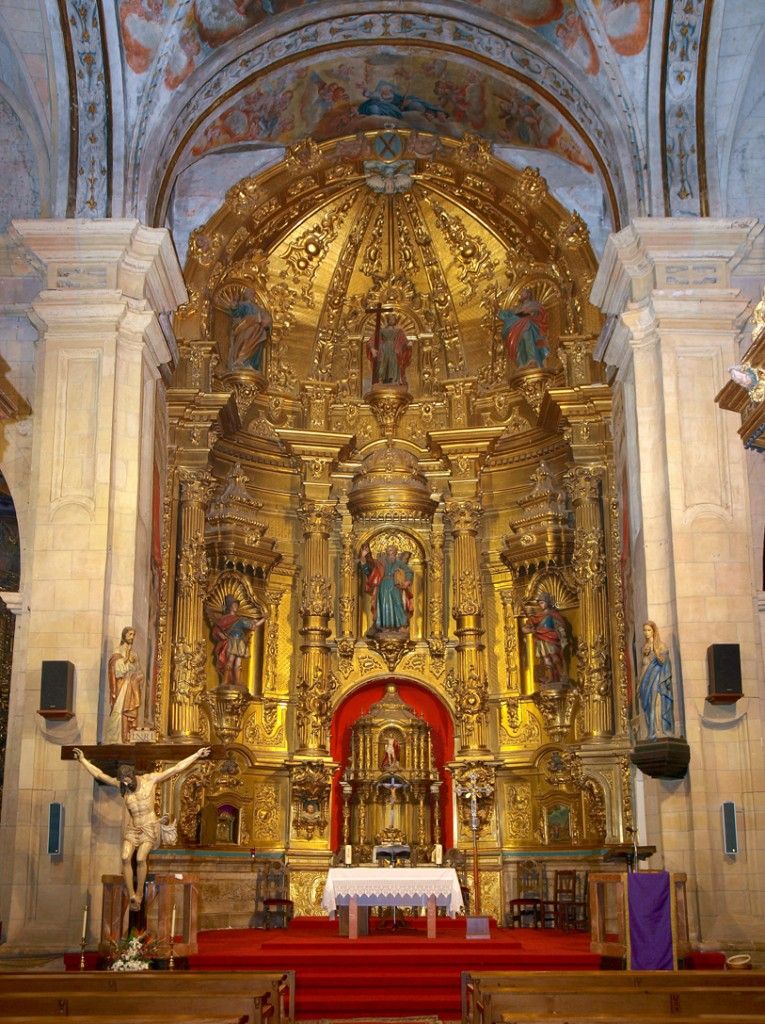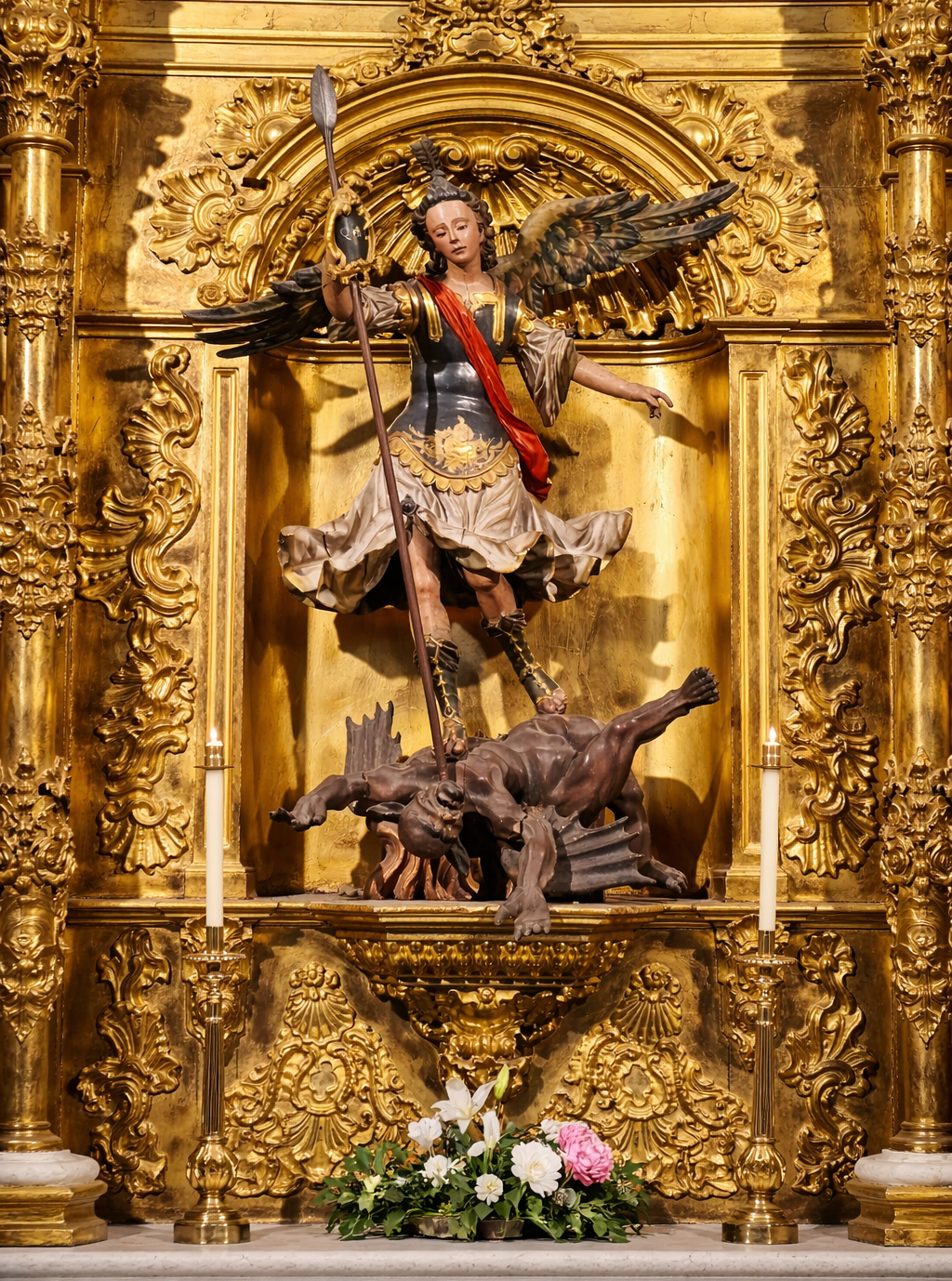
The Church of San Andrés dates back to the 7th century, when Saint Prudencio arrived in Calahorra to preach Christianity. At that time, a church was built on the same site where the current parish church stands today, although it was destroyed by the Arabs during the siege of the city. After the conquest of Calahorra by King García “el de Nájera”, the temple was rebuilt, as was the Cathedral, in a process that marked the beginning of its medieval history.
*** Translated with www.DeepL.com/Translator (free version) ***
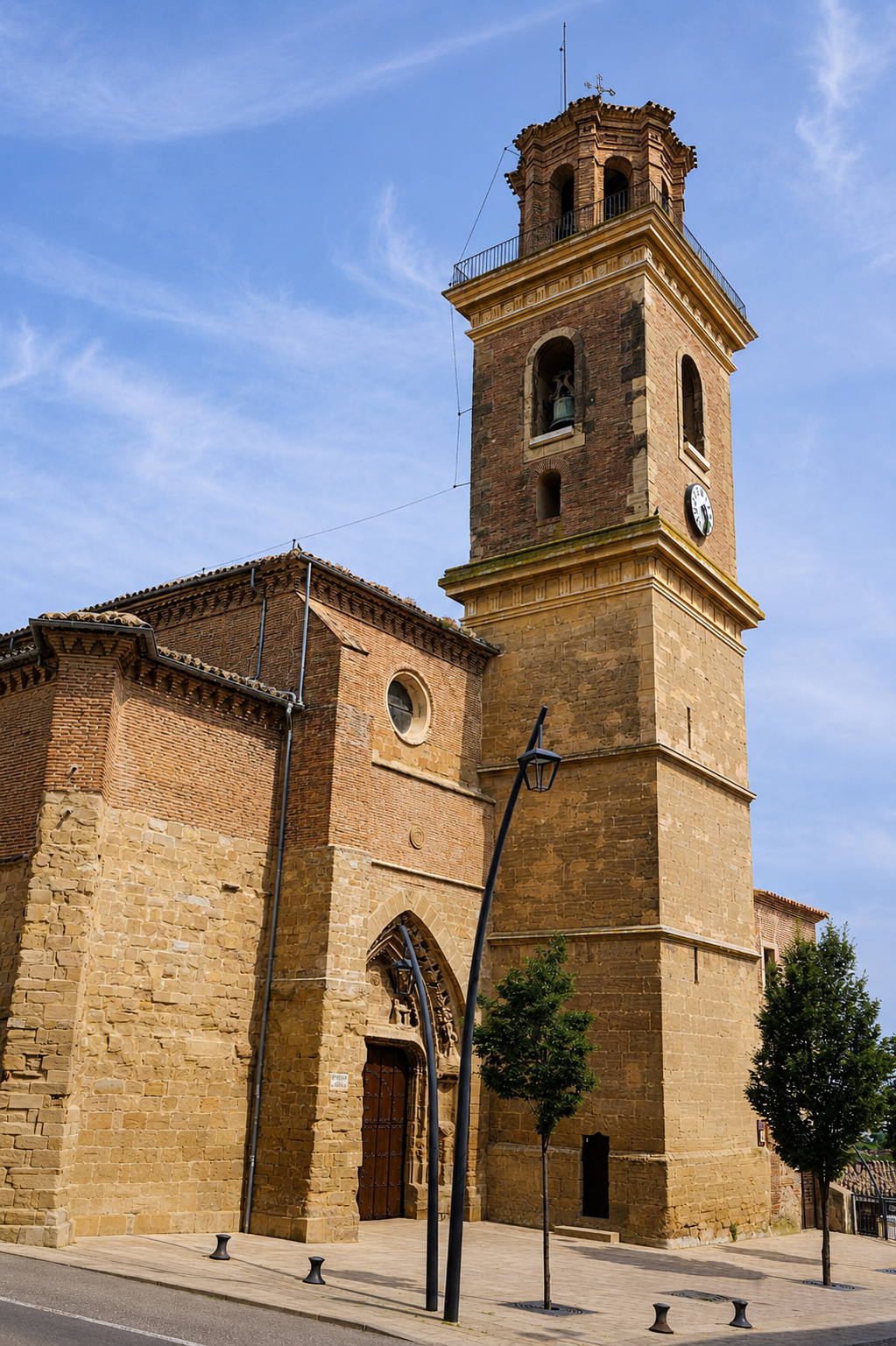
Over the centuries, the church underwent several renovations, most notably a major remodeling in the 16th century. The result of this renovation was a Gothic-style building that retains no elements of the original temple. In the 18th century, the church was enlarged with an additional bay and a new apse, giving it its current appearance with two distinct sections: an earlier Gothic section from the 16th century, with tierceron and star vaults and pointed arches; and an 18th-century section with groin vaults or lunettes.
The church’s portal, in the Flamboyant Gothic style, is particularly noteworthy. It was built using materials reused from the previous structure and features a highly original tympanum: a cross with unequal arms symbolizing the triumph of Christianity over paganism, represented by the sun, the moon, and the synagogue.
Although the church’s austere exterior doesn’t reflect the richness within, upon entering, visitors can admire its impressive Rococo altarpiece, the work of Manuel Adán in the 18th century. The choir stalls are also noteworthy, featuring 53 seats decorated with floral motifs and housing a Baroque painting of the Immaculate Conception, a work from the workshop of José Ribera in the 17th century.
The Church of San Andrés is a prime example of Calahorra’s architectural and artistic evolution, blending medieval, Gothic, and Baroque elements that make this temple one of the city’s key religious heritage sites.