The Holy Week of Calahorra, which is recognized as a Festival of National Tourist Interest since 2014, is a flagship event that combines history, tradition, and a rich christian devotion. throughout this week, Calahorra becomes a point of attraction that offers a unique experience for both locals as well as visitors.
Ceremony of the Descent
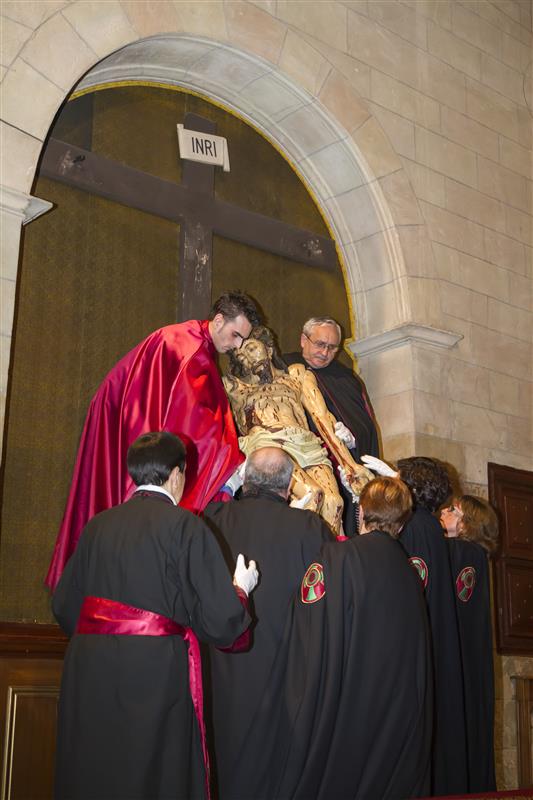
One of the most impressive of the Holy Week calagurritana takes place on the Sunday prior to the Friday of Sorrows, with the celebration of the Ceremony of the Descent, also known as the Desenclavado of the Christ of the Baptismal font in. This tradition recovered combines solemnity, history and symbolism in an act that thrills both those who are actively involved as those who discover it for the first time.
The ceremony begins at the Church of St. Andrew, the seat canonical of the Brotherhood of Santa Vera Cruz. After the eucharist, 18:30, it proceeds to the desclavado of the Holy Christ from the Grave, an image that is articulated in the year 1630, written by an anonymous author, which represents with great realism the body of Christ descended from the cross.
Then, the carving is passed on in silence to the Temple of San Francisco, on a stretcher made of wood carried by four brothers, a journey that is performed in absolute seclusion, only accompanied by the touch of a bell. Once there, we celebrate the act of veneration with the traditional “Besapiés”, and the image is placed in the Step of the Tomb, from where it will continue its journey in the days after.
Friday of sorrows
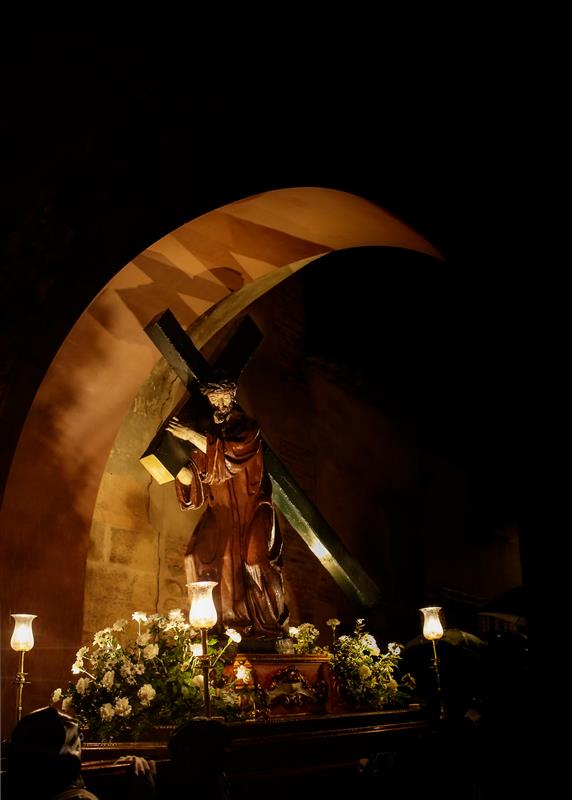
Way of the Cross, Christ of Medinaceli
Every Friday Dolores (the Friday before palm Sunday), the streets of Calahorra welcome to one of the acts most collected and solemn Holy Week: the Way of the Cross Procession of the Holy Christ of Medinaceli. This procession, full of symbolism and fervor, takes place at 21:00 hours, starting from the Church of San Andrés and ending at the College of the RR.PP. Augustinians, traditional custodians of the step.
The route passes through the town —Planillo of San Andrés, Bellavista street, Eras, Santa Teresa Jornet, Santa Rita and Avenue of the Season— in an atmosphere of recollection and respect, that invites participation and contemplation.
The image procesionada is a polychrome carving of great historical value and devotional, made in 1580 by Juan Fernandez Vallejo. Cover the shoulders of 16 brothers, known as workers, this figure of Christ has generated profound devotion over the centuries. Tradition has it that you can ask for three wishes, of which one will be granted.
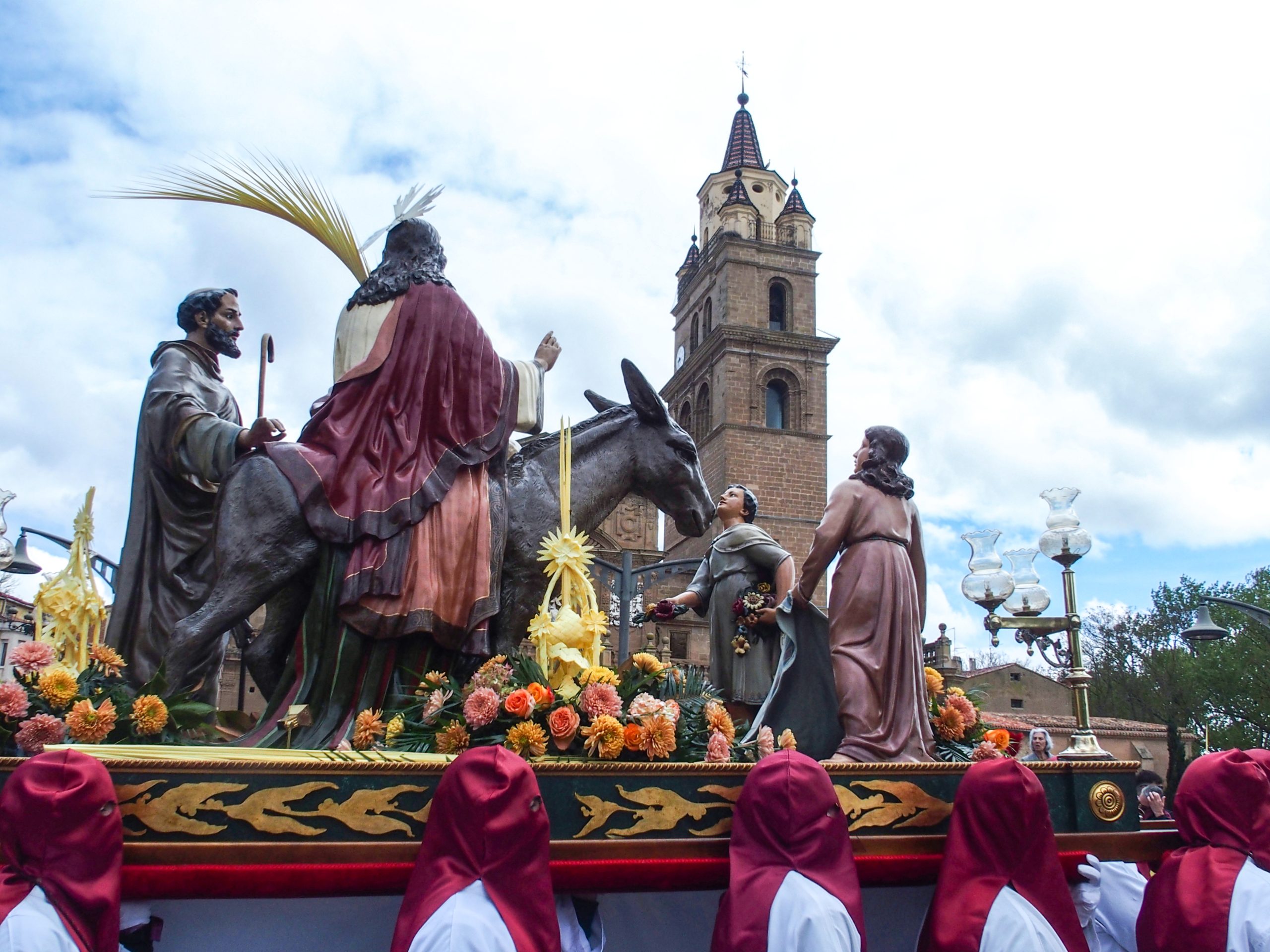
The palm Sunday mark in Calahorra in the visible home festive and of the Holy Week with the procession of the Entry of Jesus into Jerusalem, popularly known as The Borriquilla. This parade, great-rooted and colorful, combines history, religious fervor and a remarkable citizen participation.
With an antiquity documented prior to 1595 this procession is one of the most loved by families calagurritanas. It involved the children of the parishes of the city, accompanied by the band children of drums and the band head of the Brotherhood of the Santa Vera Cruz. The image is cover art for the 26 workers, escorted by the Municipal Police uniform, with a gala, in an event that brings together tradition, the solemnity and emotion collective.
The procession is part of the Church of Santiago Apostle and goes through the center of the city to the Cathedral of Santa Maria, where we celebrate one of the most anticipated moments: the sounds of holiday bells, which adds to the movement alegre ramos in the hands of hundreds of attendees, evoking the triumphal entry of Jesus into Jerusalem.
Size, made in 1943 by the sculptor Jaime Martrús and Riera and acquired by the City of Calahorra, is an iconic symbol of this day. The ceremony is presided over by the Bishop of Calahorra and La Calzada-Logroño, along with representatives ecclesiastical and civil, in a setting that unites the liturgical and popular.
Sunday
The palm Sunday mark in Calahorra in the visible home festive and of the Holy Week with the procession of the Entry of Jesus into Jerusalem, popularly known as The Borriquilla. This parade, great-rooted and colorful, combines history, religious fervor and a remarkable citizen participation.
With an antiquity documented prior to 1595 this procession is one of the most loved by families calagurritanas. It involved the children of the parishes of the city, accompanied by the band children of drums and the band head of the Brotherhood of the Santa Vera Cruz. The image is cover art for the 26 workers, escorted by the Municipal Police uniform, with a gala, in an event that brings together tradition, the solemnity and emotion collective.
The procession is part of the Church of Santiago Apostle and goes through the center of the city to the Cathedral of Santa Maria, where we celebrate one of the most anticipated moments: the sounds of holiday bells, which adds to the movement alegre ramos in the hands of hundreds of attendees, evoking the triumphal entry of Jesus into Jerusalem.
Size, made in 1943 by the sculptor Jaime Martrús and Riera and acquired by the City of Calahorra, is an iconic symbol of this day. The ceremony is presided over by the Bishop of Calahorra and La Calzada-Logroño, along with representatives ecclesiastical and civil, in a setting that unites the liturgical and popular.
Holy Monday
Procession of the tenants
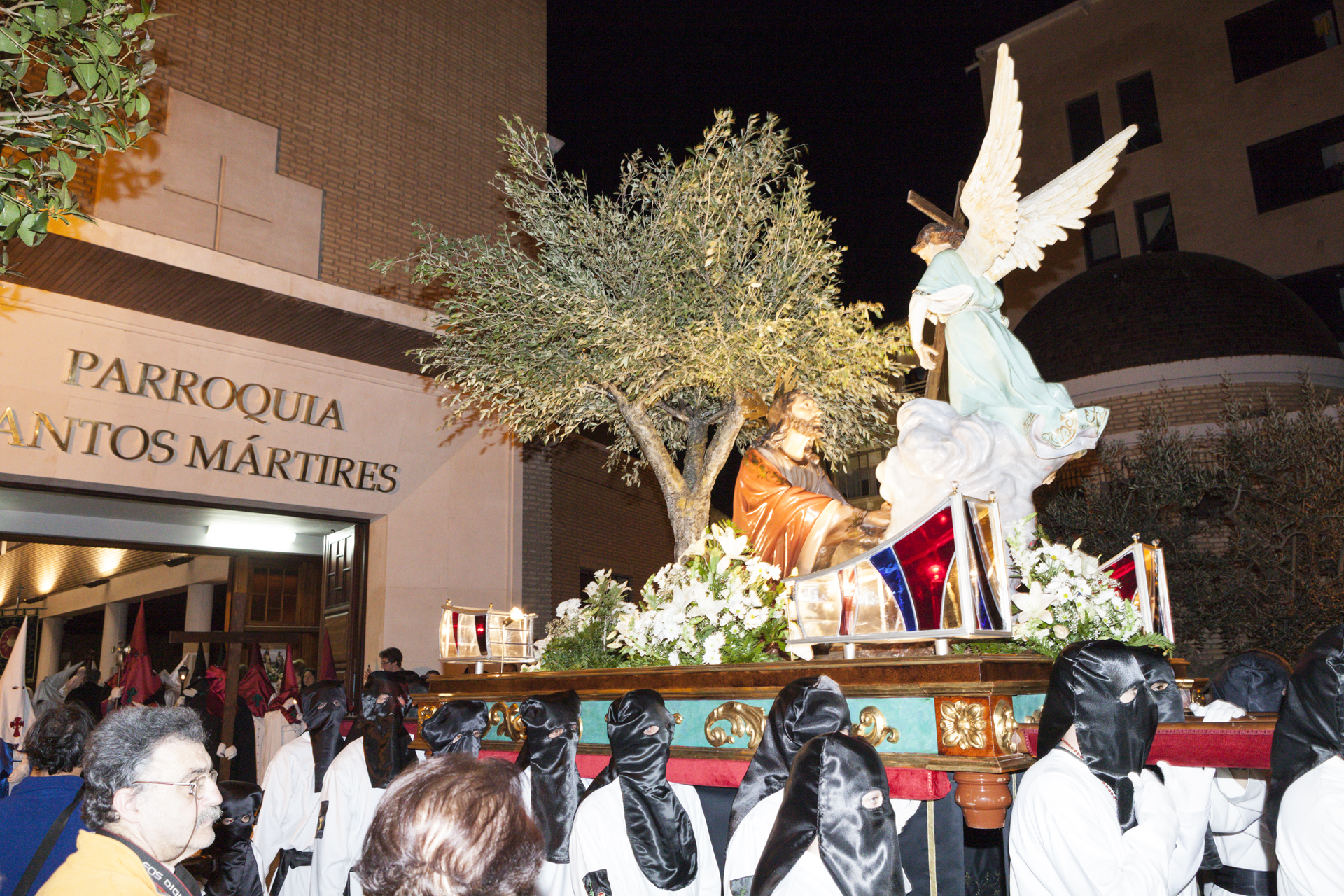
The Holy Week of Calahorra continues on the night of Monday of Holy week, with the moving Procession of the Tenants, an appointment of deep local tradition that recalls the historical link of the city with the agricultural world and the popular devotion. Its name makes reference to the ancient Brotherhood of Husbandmen, active between 1961 and 1989, which in its day was tasked to carry one of the steps protagonists.
From the Church of the Holy Martyrs, there are two images that mark the processional route through the suburbs of the city to the Residence of Conception,. The first is “the agony in The Garden” works carried out in 1943 by the sculptor Arseni Bertran and Surroca, donated by the entrepreneur calagurritano Francisco Moreno. This size full of expressiveness and symbolism, is carried by 24-workers.
Accompanying the Virgin of the Solitude, a figure of the candlestick out of the EIGHTEENTH century, accompanied only by women: 12 lock –, as well as penitents and drums that reinforce the intimate nature and respectful of this part of the courtship.
Holy Tuesday
Via Crucis Penitencial Youth
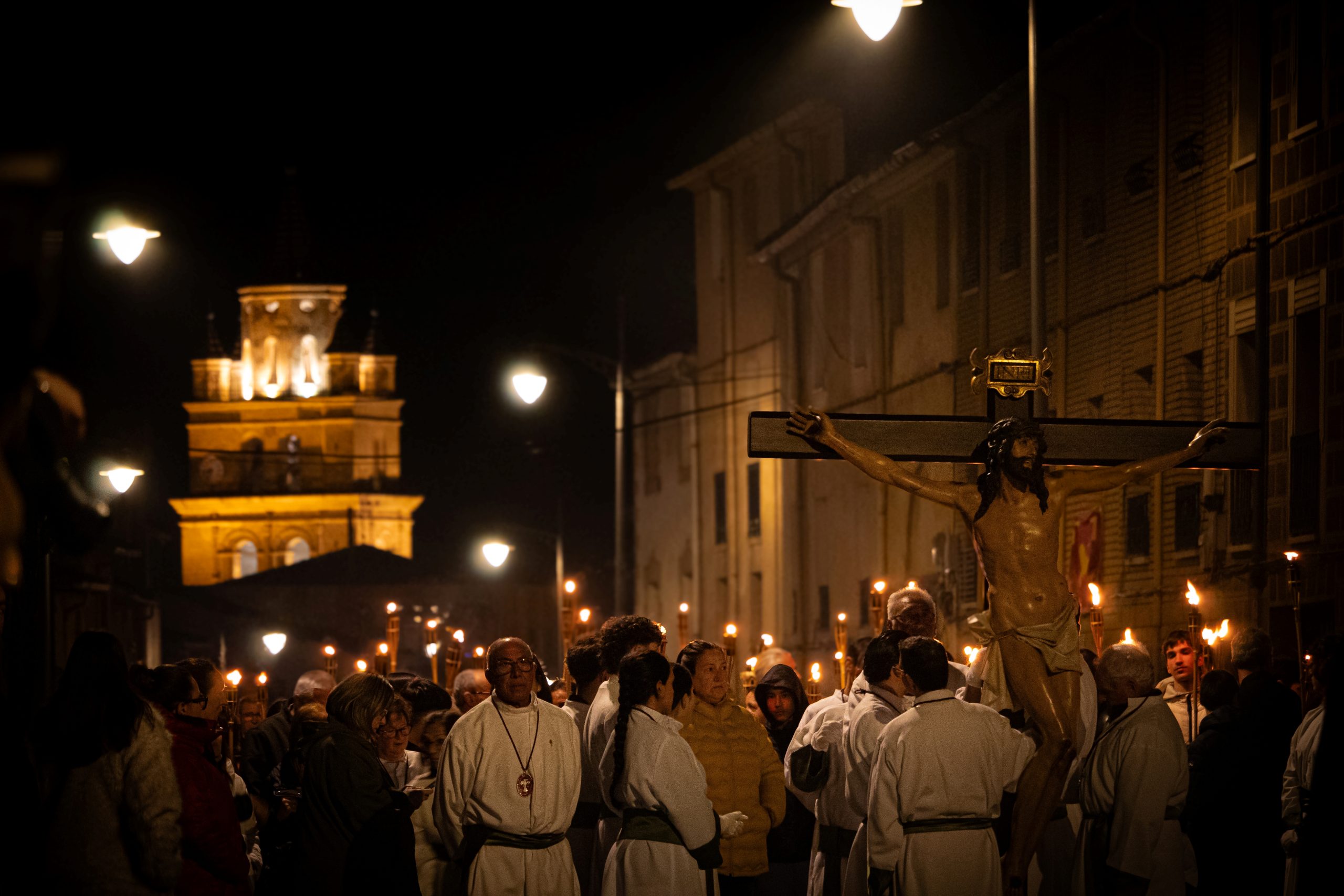
The evening of Holy Tuesday in Calahorra offers one of the expressions most unique and participatory your Holy Week: the Way of the Cross Penitential Youth, a procession was born in the 90’s and it has been consolidated as an act deeply symbolic, especially close to the younger generations, but open to all persons who wish to get involved.
This way of the cross part of the Cathedral of Santa Maria and ends in the Parish of the Holy Martyrs, through the streets in a climate of silence, introspection and contemplation. The image character of the Holy Christ of Agony, a one-size-anonymous 1645 attributed to John Bazcardo, advances between torches, accompanied by the faithful and visitors in a journey full of symbolism.
One of the more distinctive components of this procession is its participatory nature: in each season of the tour, anyone wizard can have the opportunity of carrying the image, thanks to the invitation of the chief-of-way. In the final station, the size is driven by three members of the Civil Guard, in charge of putting it in the temple.
Wednesday Of Holy Week
Procession of the seven words (Holy Christ of Agony)
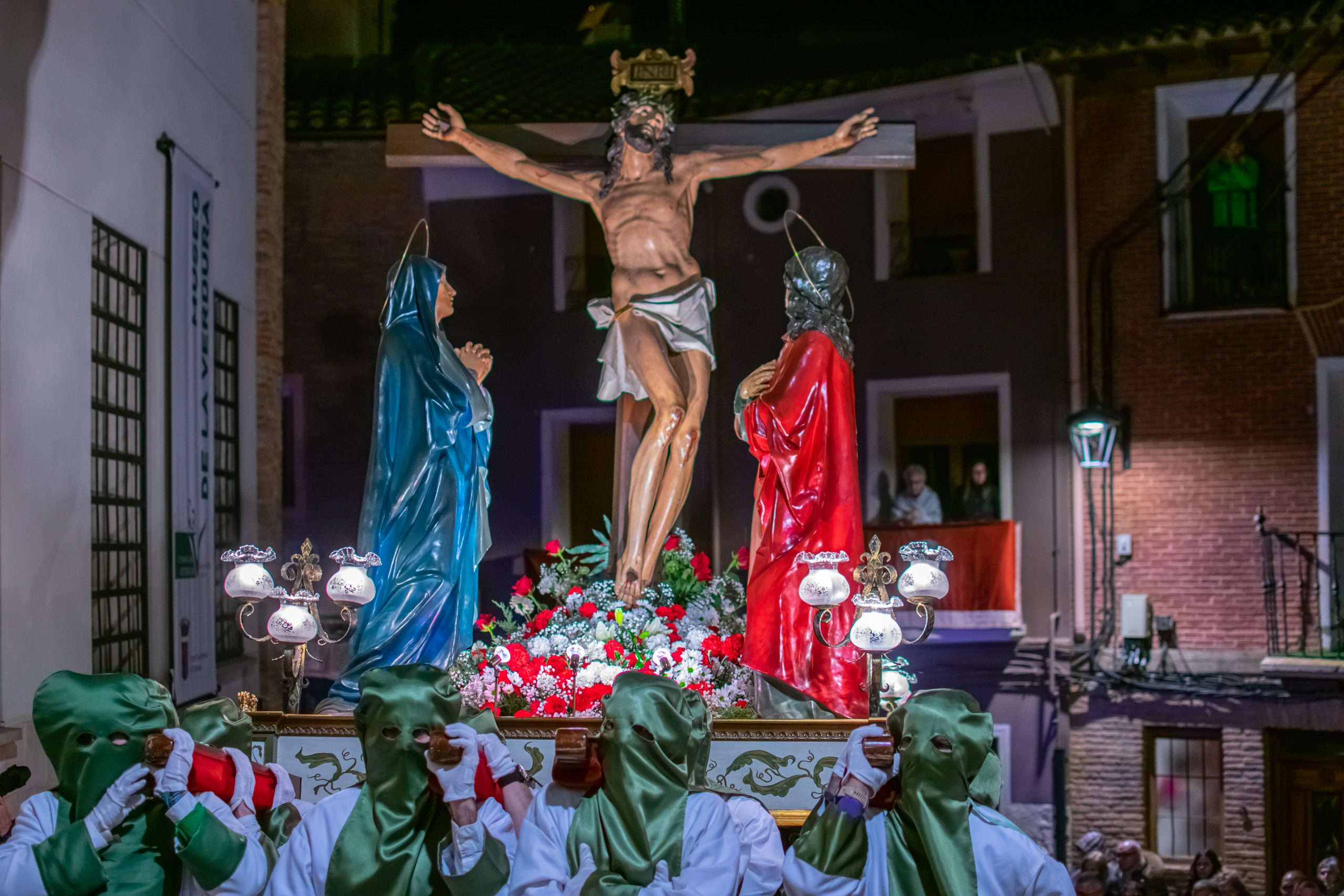
The evening of Holy Wednesday, Calahorra live the Procession of the Seven Words, popularly known as the Holy Christ of Agony,. An act full of solemnity and symbolism that runs through the streets from the Parish of the Holy Martyrs to the Church of San Francisco.
More than 400 members accompany this procession, many of them barefooted as a sign of promise fulfilled. The silence of the night only to be interrupted by the drums destemplados and the call of the horn, creating an atmosphere that invites the reflection. Three penitents carrying large crosses, according to the imposing step of the Holy Christ, a size of the SEVENTEENTH century attributed to John Bazcardo, escorted by the figures of Mary and Saint John at the foot of the cross.
Historically, this step was carried by medical students, pharmacists, and lawyers, which earned him the nickname of “the step of physicians”. Today, carry it on the shoulders 24 brethren, keeping alive a tradition that is part of the soul of the Holy Week calagurritana.
Holy Thursday
Procession of the Meeting
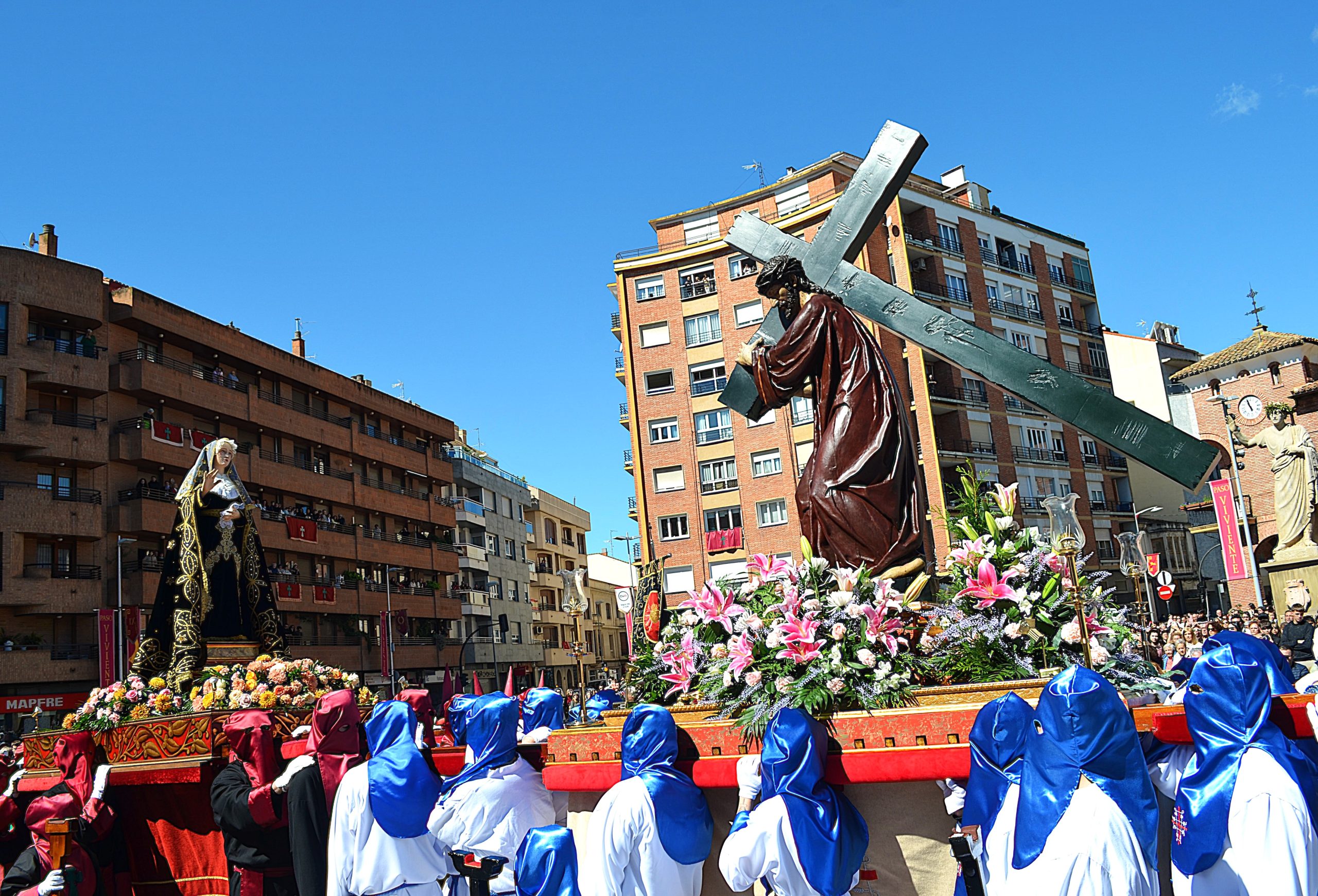
The morning of Holy Thursday, Calahorra presence of one of its most emotional moments with the Procession of the Meeting. This procession is one of the oldest of the Holy Week calagurritana, with roots that date back to before 1540. According to historical records found in the minutes of the council from 1560, this celebration has been a fundamental part of the tradition of the city.
From the College of the RR.PP. Augustinian friars and was part of the procession of the Christ of Medinaceli, a size of 1580 work of the person of Juan Fernández Vallejo. The figure of Christ is carried on the shoulders of 16 employees and is known for the deep devotion that inspires. The faithful usually ask for three wishes, with tradition stating that one of them is granted.
From the residence, San Lázaro, on the opposite side of the city, part of the Procession of our Lady of sorrows, a beautiful stature of the candlestick out of the EIGHTEENTH century. This image is cover art by 12 employees, each step being an expression of the faith and tradition of Calahorra.
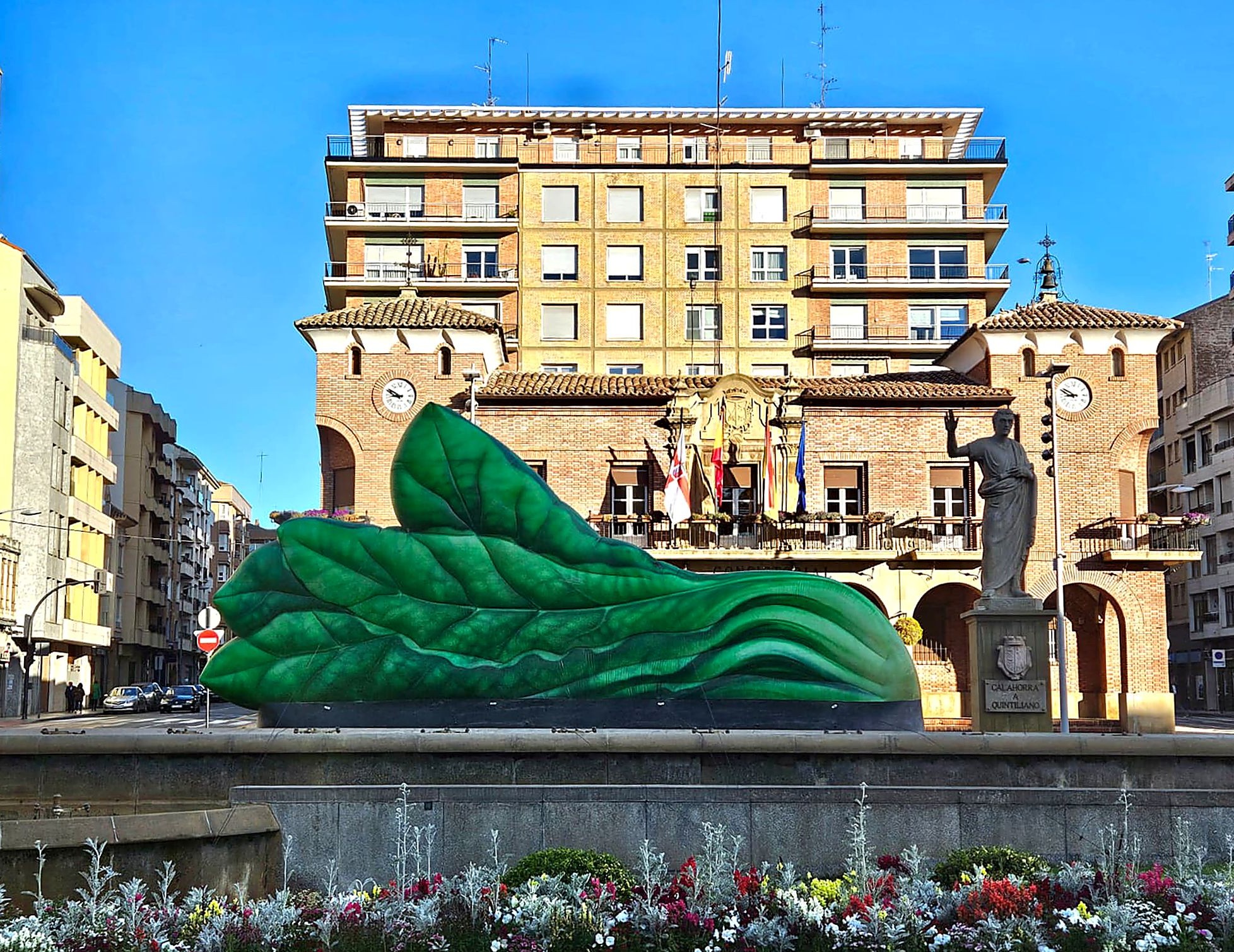
Both processions converge on the Roundabout of Quintiliano, in front of the town Hall, where the meeting culminates in a moving spectacle. The images are performed simultaneously to the marches performed by bands of drums and bugles, a moment full of solemnity and excitement that leaves an impression on those who witness it.
After this emotional meeting, both steps are continuing their tour set up the Temple of San Francisco, following a tradition that combines devotion, history and crafts. Later, in the evening of Holy Thursday, we celebrate the Mass of the Lord’s Supper in the Church of San Andrés, an event that reinforces a sense of community and spiritual of the day, acting as the headquarters church of the Confraternity of Santa Vera Cruz.
Dramatization of the Passion
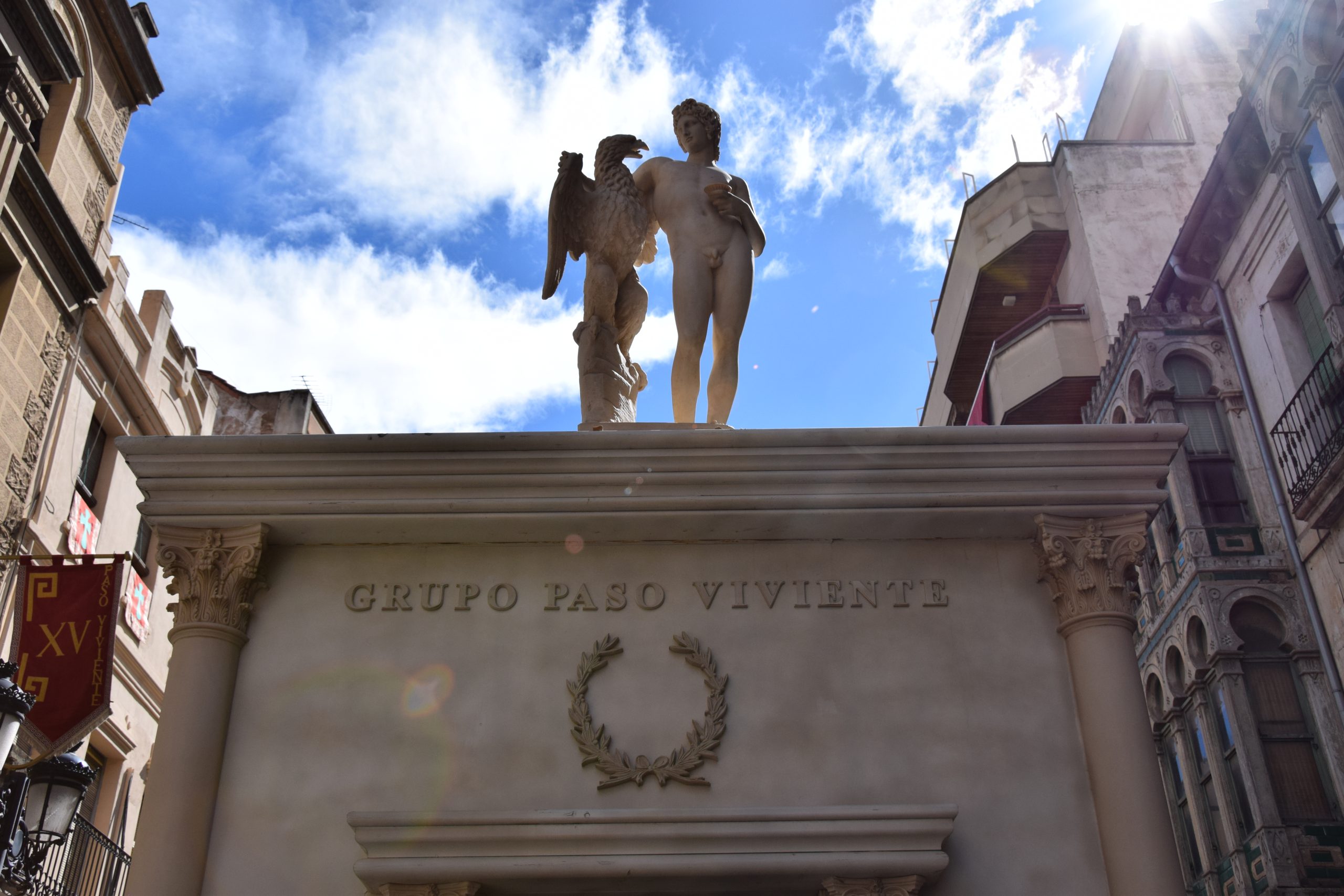
Since 1982, the Cultural Association Group Step Living has been an integral part of the Holy Week of Calahorra through its impressive Staging of the Passion of Christ. This representation began as a brief performance of 15 minutes in the Plaza of the Satin, focused on the Crucifixion, but it has expanded significantly over the years.
Today, the Dramatization of the Passion develops over a kilometer in the Avenida de Valvanera covering multiple scenarios depicting the last hours of Jesus from his Entry into Jerusalem until the completion in the Resurrection. This event is not only a show of great quality and realism, but also an immersive experience for visitors, who are accompanying to walk different scenes for more than two hours.
All the texts that accompany the performances are based on the New Testament and have been carefully adapted for the members of the association. In addition, the music and sound effects have been developed in a professional studio recording, which adds an extra level of authenticity to the performances. Thanks to these recordings, viewers can still hear the voices of the first actors who participated in this significant work, although many of them are no longer present.
Scenes
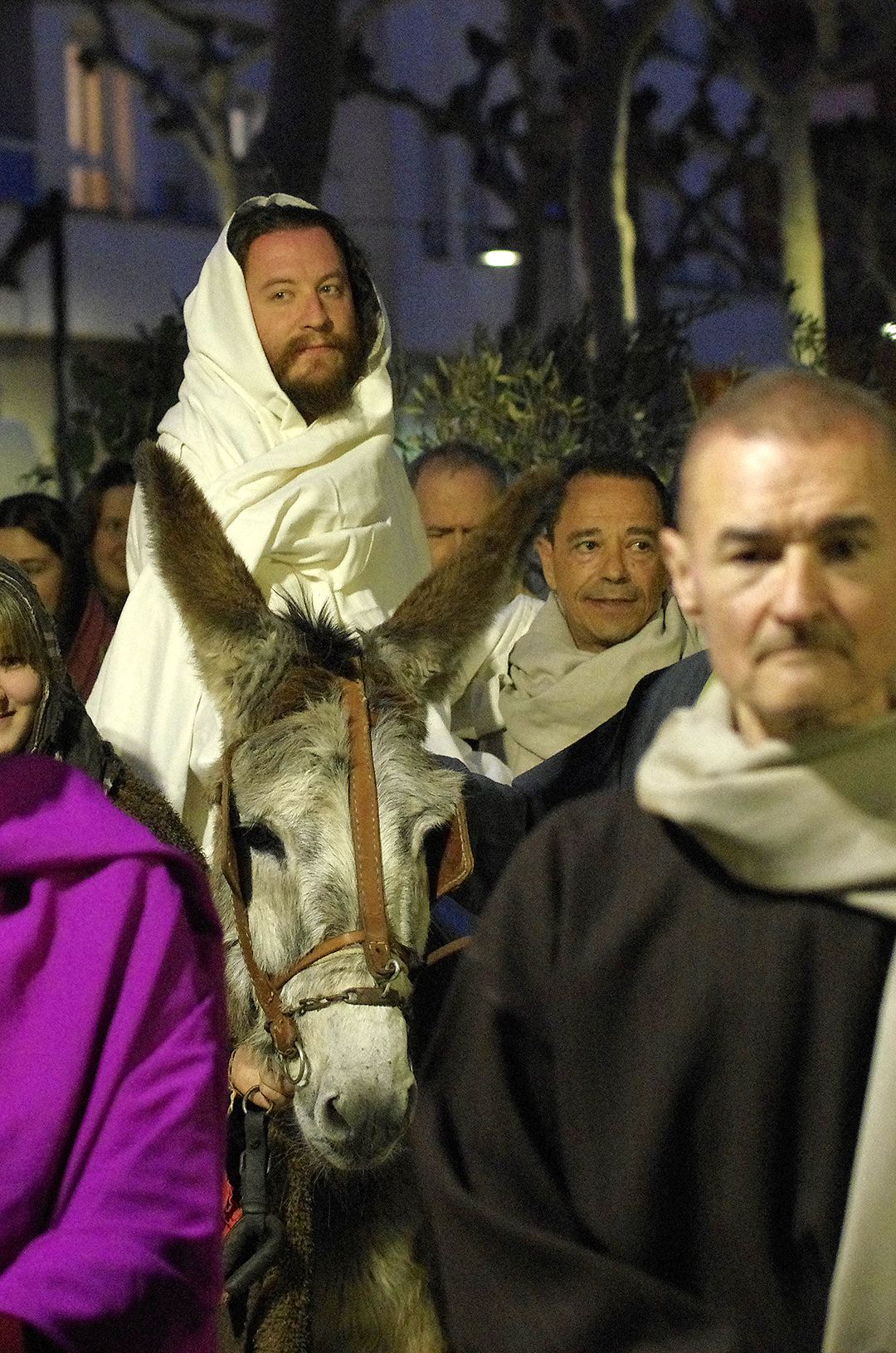
Entry into Jerusalem
Jesus entered the city riding on a borriquillo, received between cheers and olive branches. Location: the First tranche of Avda. Valvanera
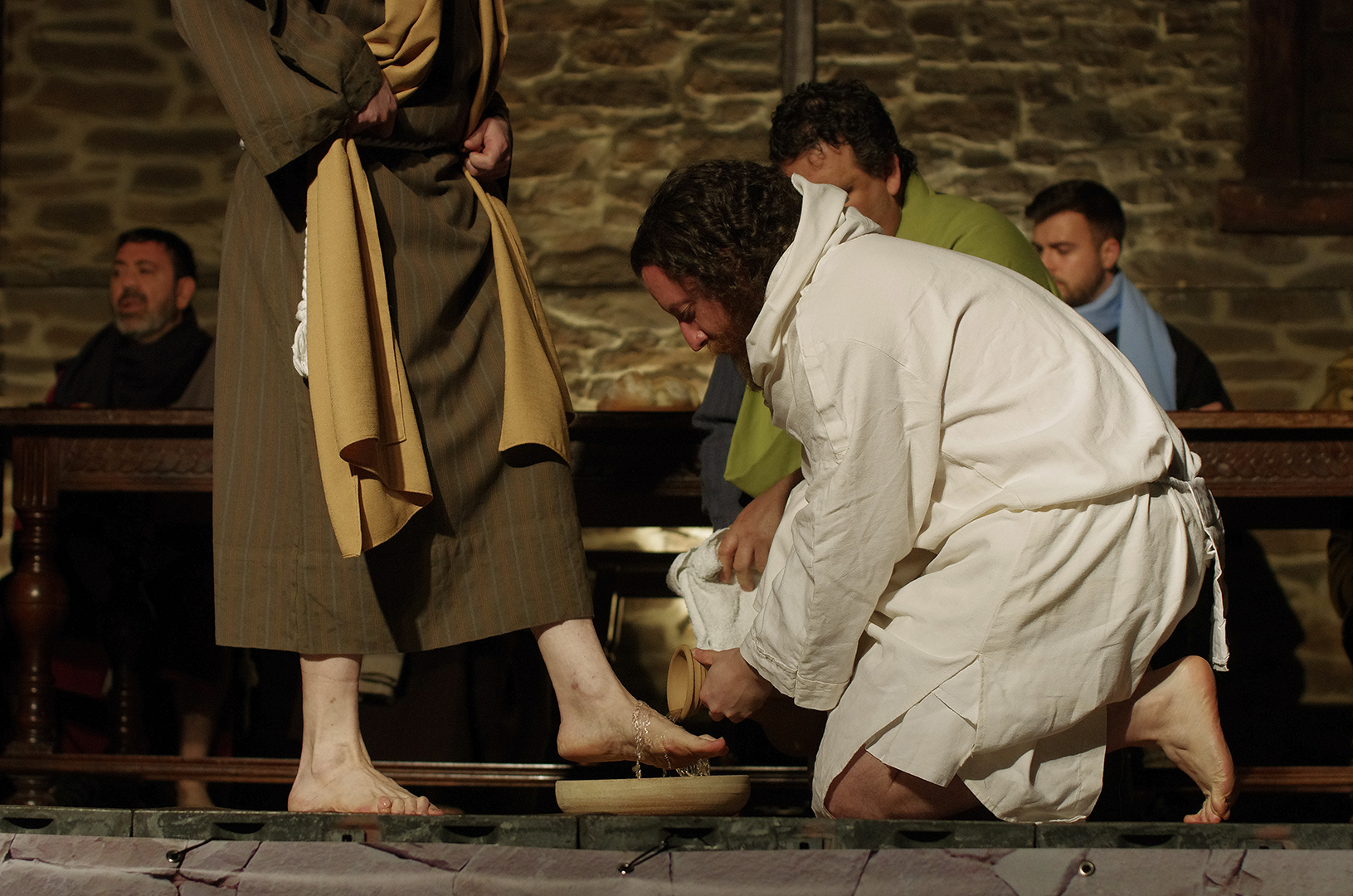
The Last Supper
A scene close to the public for the disciples to meet Jesus before the beginning of his passion. Location: Confluence of Avda. Valvanera with Avda. the Angels
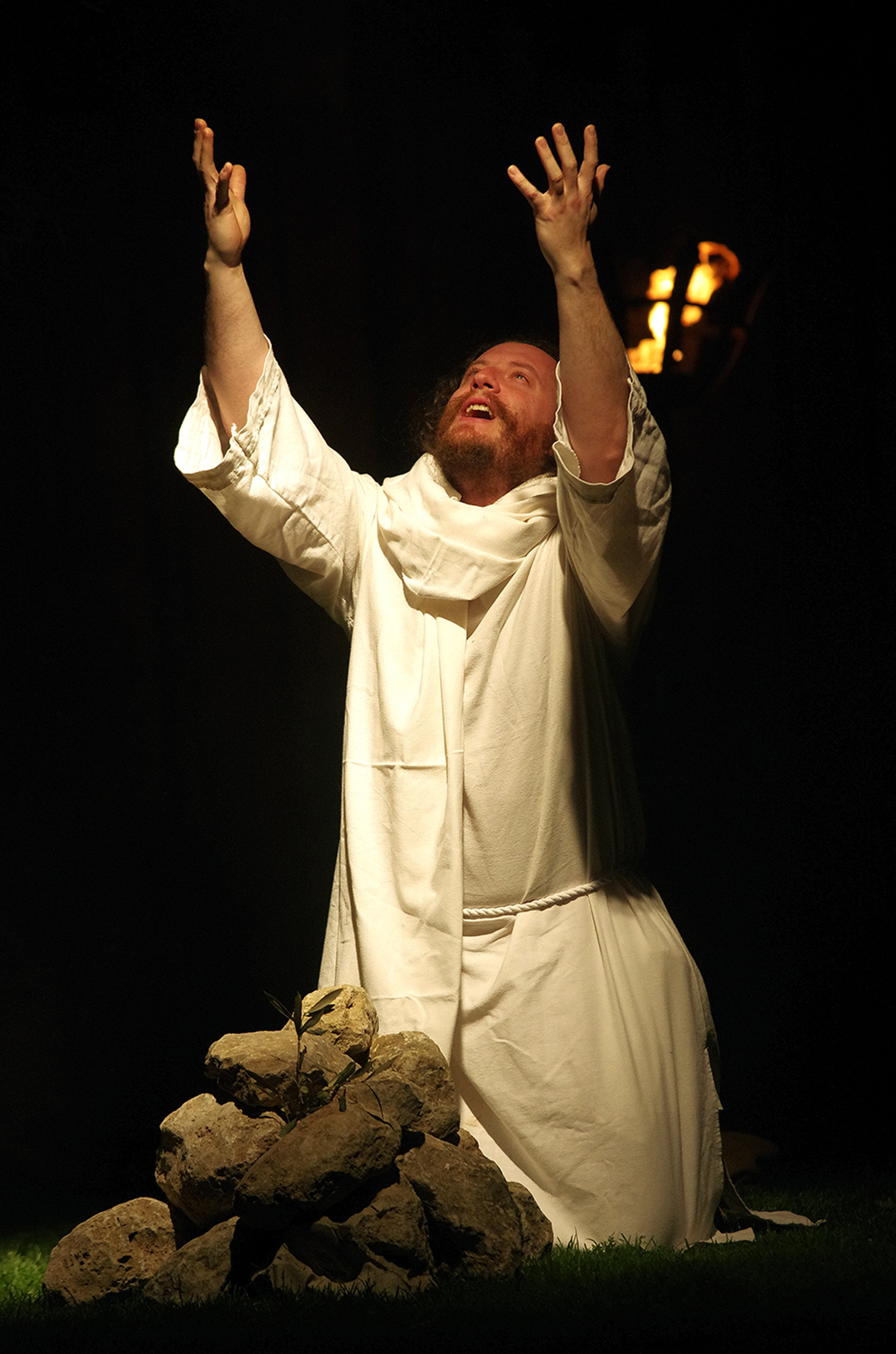
Prayer in the Garden and Arrest
Jesus prays alone among olive trees, before being arrested by the hundreds, led by Judas. Location: Garden annex to the Avda. Valvanera
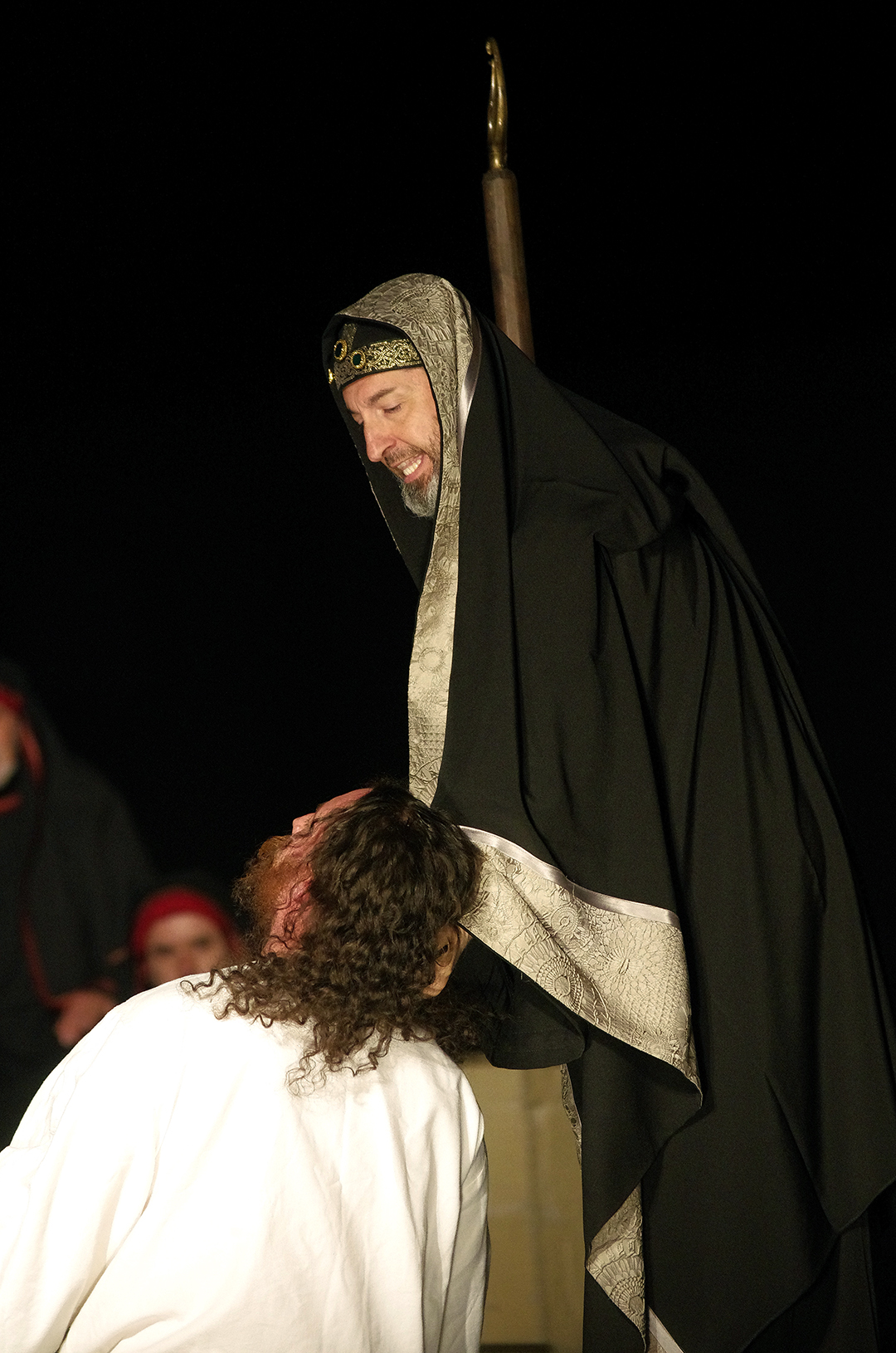
Judgment of Caiaphas and Denials of Peter
On a stage lit by a large chandelier, Peter denies Jesus three times while conducting the trial religious. Location: Cross-Avda. Valvanera and C/ Bebricio
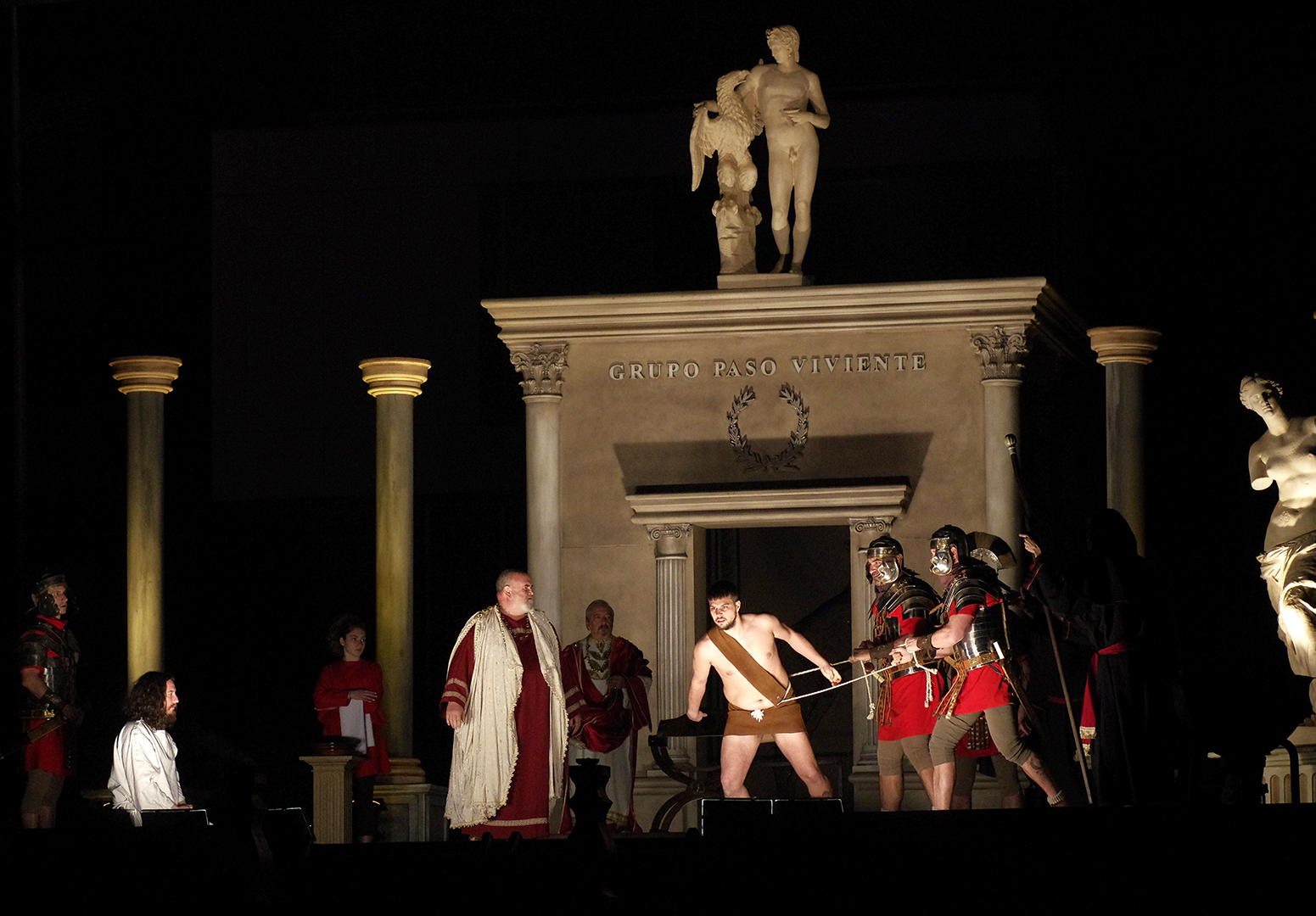
Judgment of Pilate, the Flagellation, the Crowning and the release of Barabbas
One of the scenes more intense and emotional. Jesus is sentenced, scourged and crowned with thorns. Location: Cross-Avda. Valvanera and C/ General Gallarza
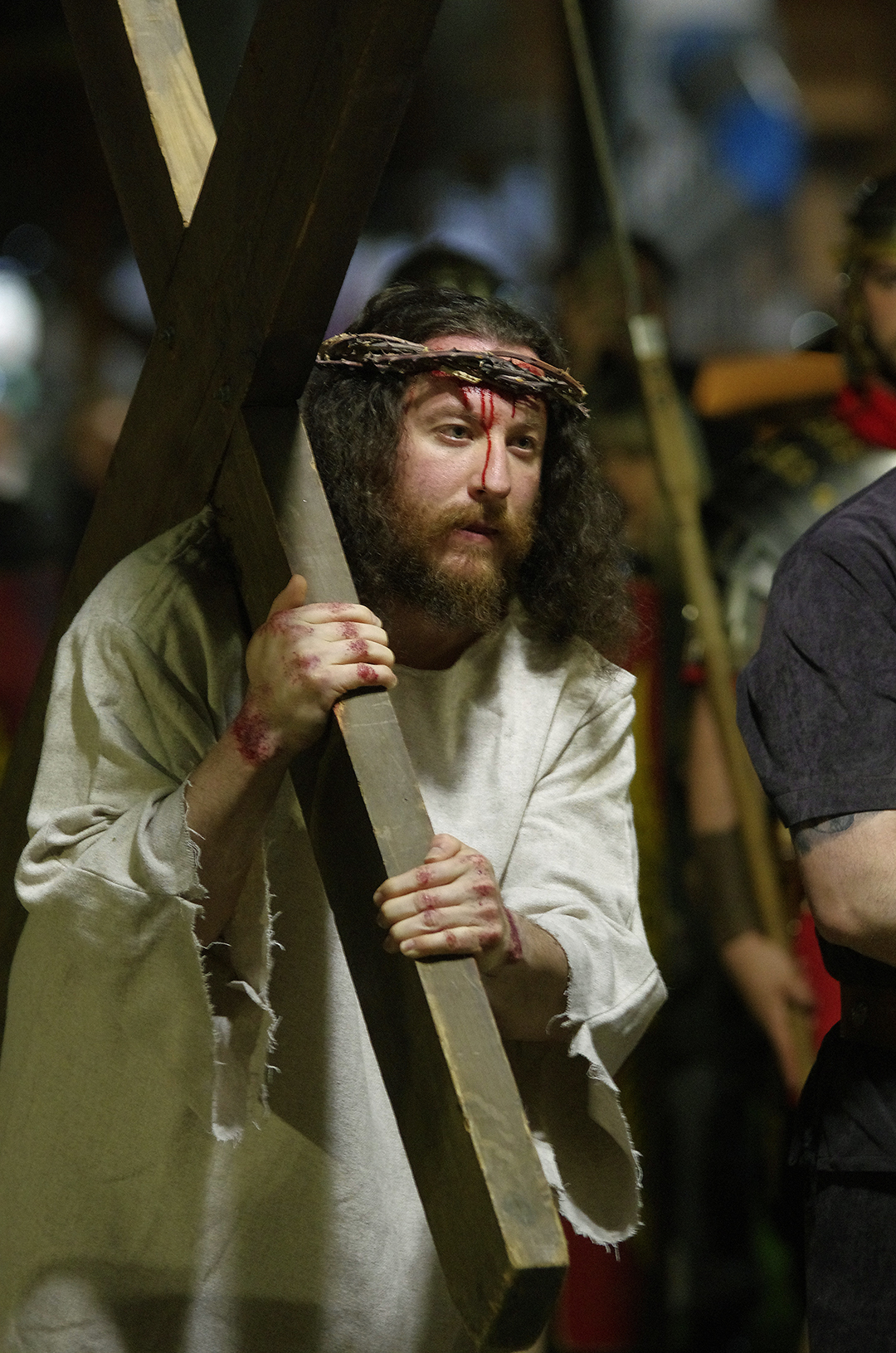
The three falls
Jesus, carrying the Cross, falls three times on the road to Calvary. He is assisted by simon of Cyrene and Veronica. Location: From the Palace of Pilate to the end of the Avda. Valvanera
The despair of Judas
As the procession continues on its course, Judas confronts his remorse in a scene full of drama. Location: Hillside facing the water Tank,
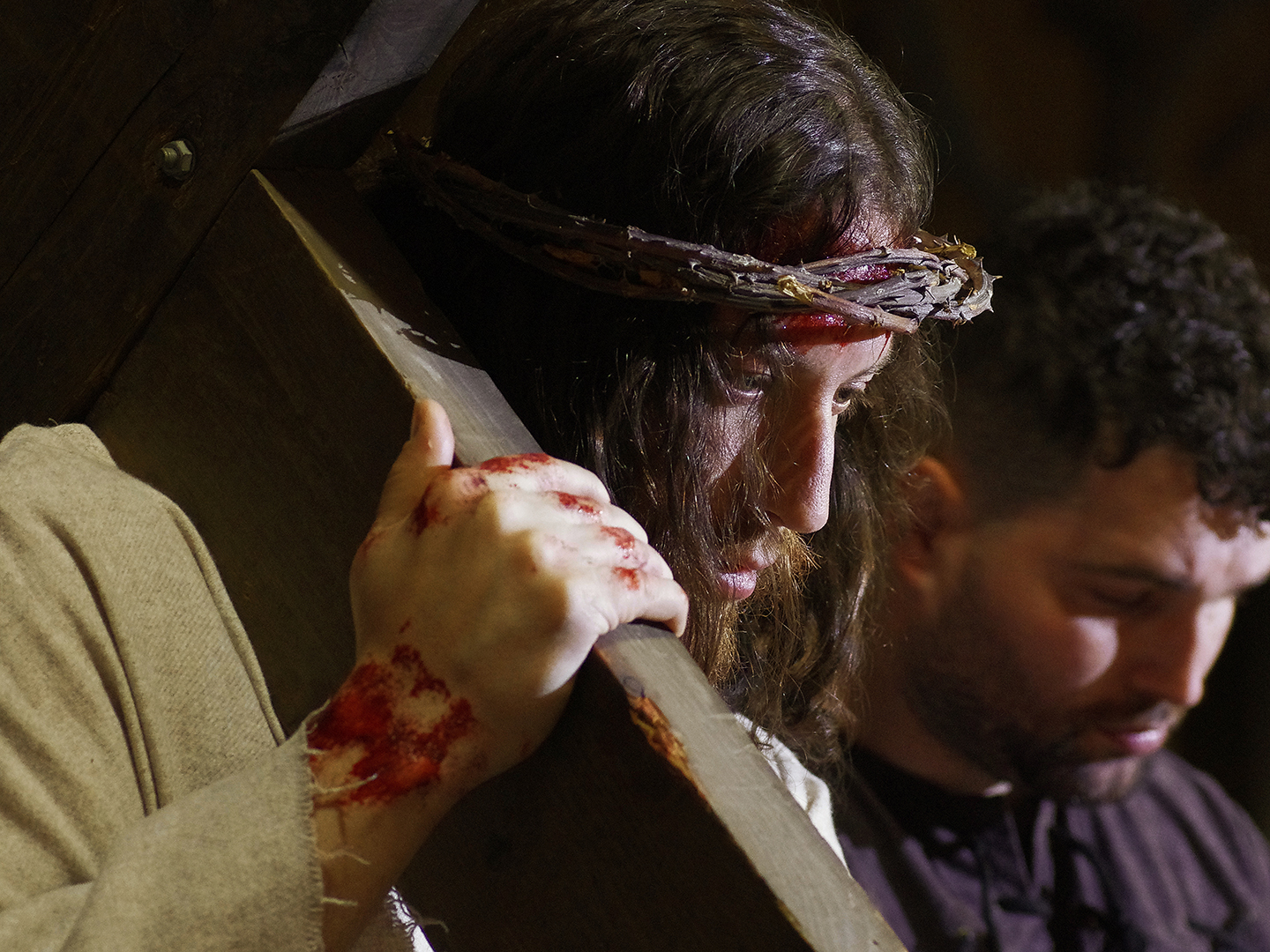
the Crucifixion and The Descent from the cross
On Golgotha, Jesus is nailed to the Cross with two thieves. The scene ends with the deposition and the crying Mary face of his dead Son. Location: Hillside facing the water Tank of
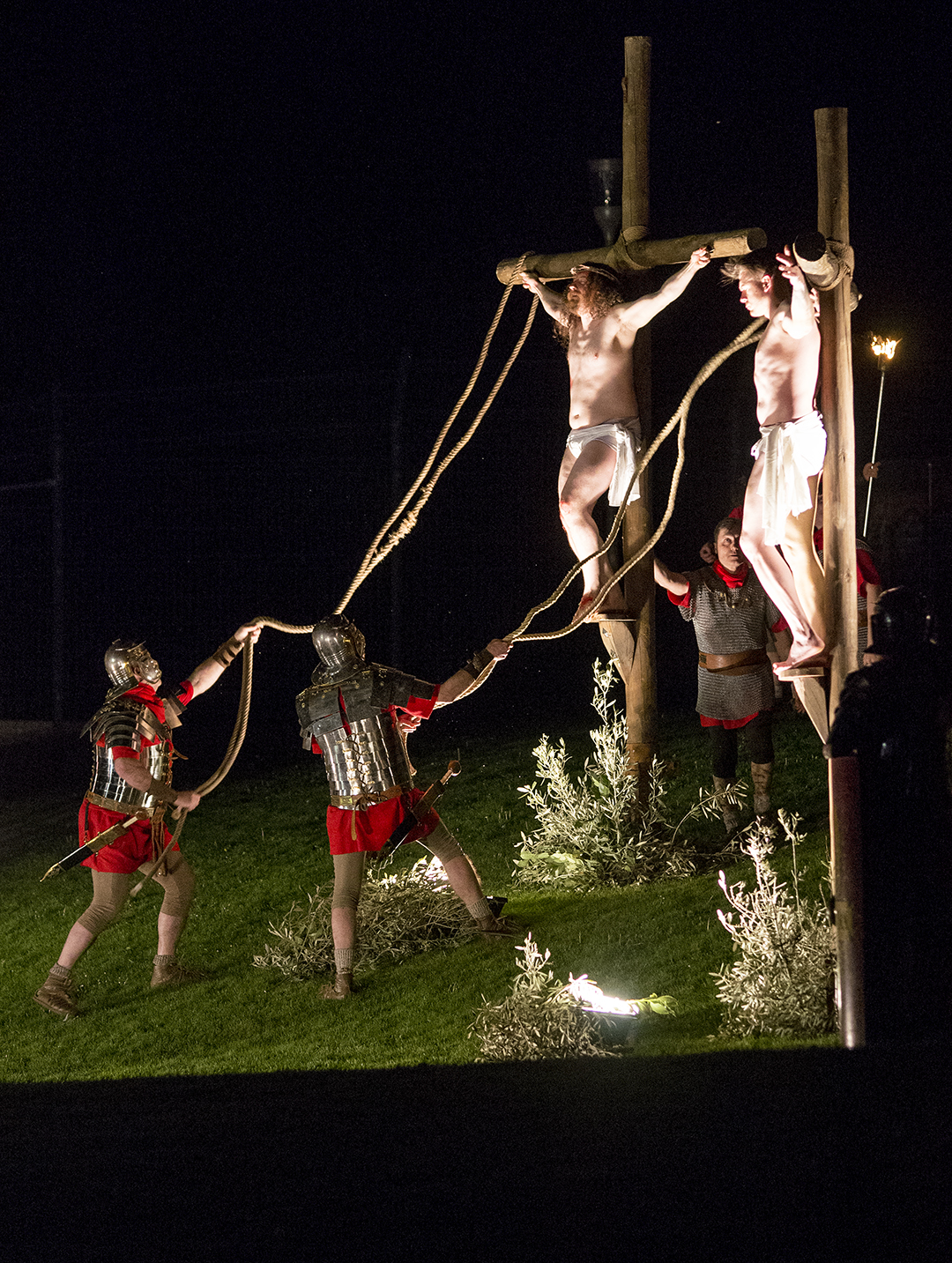
The Resurrection
The final scene shows the glorious Resurrection of Christ. The cross is lit, the tomb is opened and the audience breaks into applause and unanimous. Location: Hillside facing the water Tank
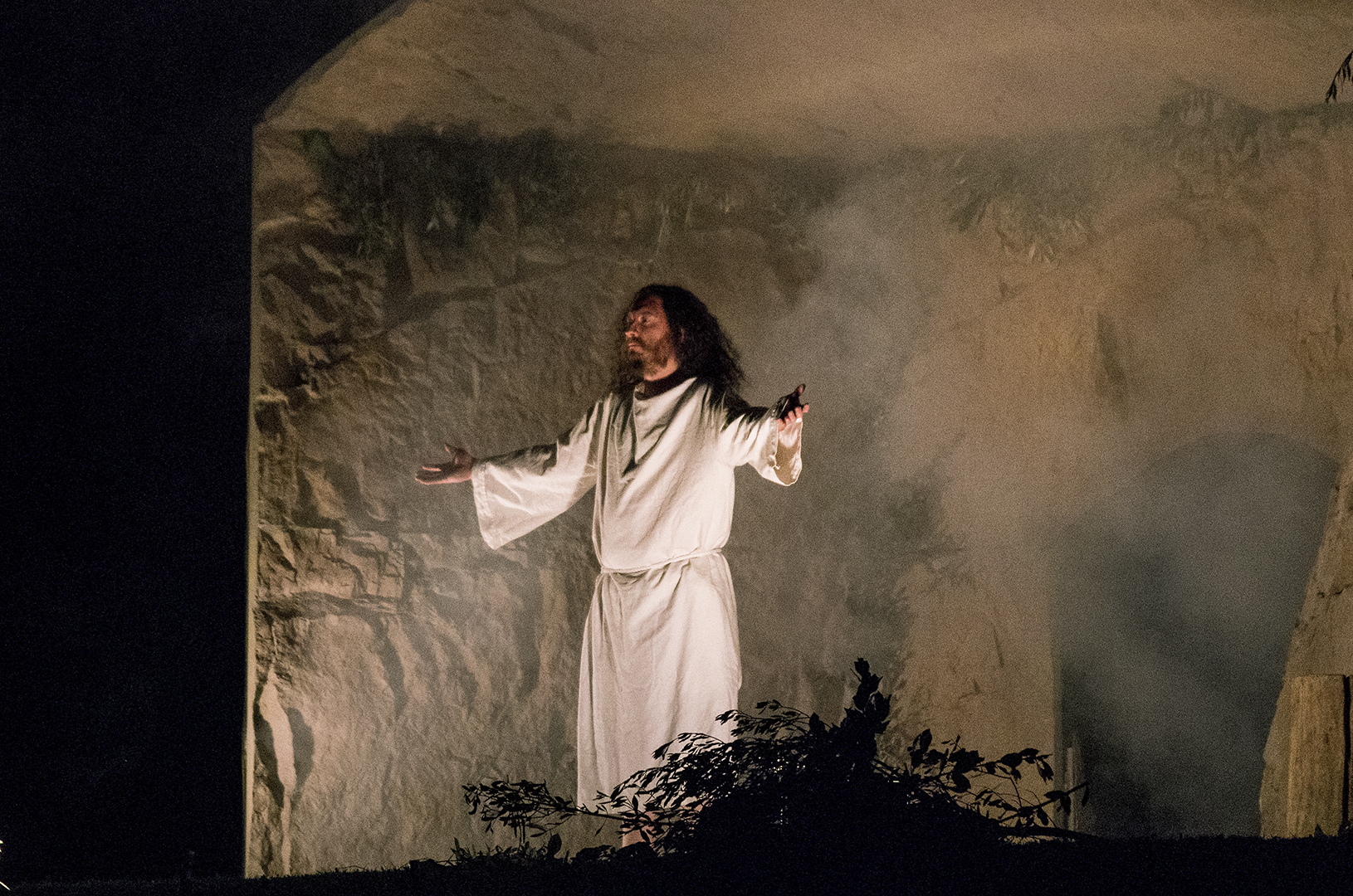
Game of the Sheeple
During the early hours of Thursday and good Friday, in the later days of the processions, this traditional game brings together many wizards in the local casinos. Despite the simplicity of the game, fascinated by the high emotion of your bets. Women are not allowed to participate or attend, which adds a touch of exclusivity.
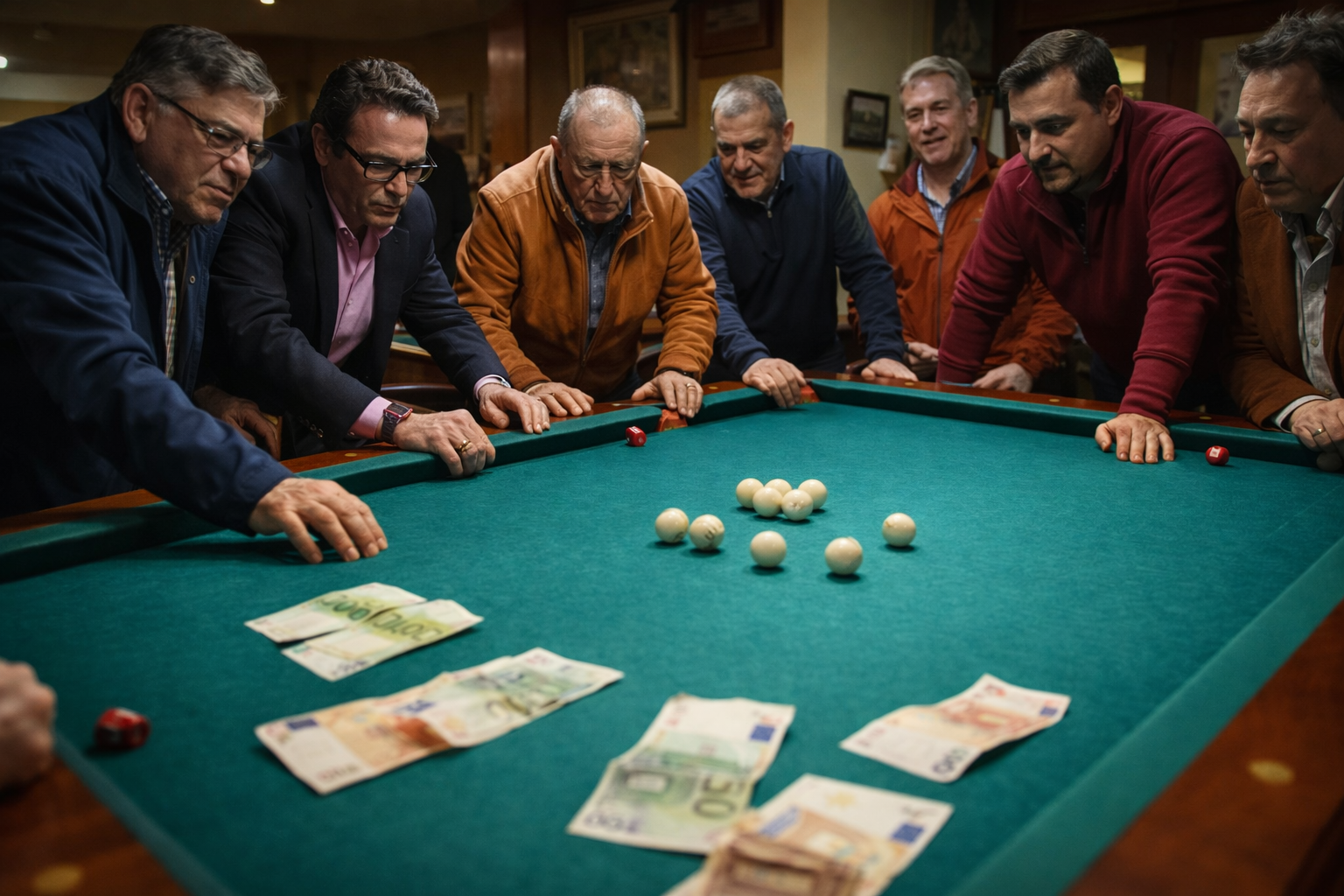
Good Friday
Procession of Silence
The morning of good Friday starts with the austere Procession of Silence, a tradition marked by the solemnity and the use of ancient instruments like rattles and the pawls. In this procession, two main steps are highlighted: The Cristo de la Vera Cruz, an extraordinary carving of the year 1560 work of Guiot Beaugrant, and Piety, a sculptural group of 1943 created by Miguel Blay and Fabrega, accompanied by more than 300 brethren in the streets.
On the basis of the Parish of San Andrés at 12:00 h, the procession follows a route that crosses the Planillo of San Andrés, Bellavista, Sun, Large, Satin, More and culminates in the Temple of San Francisco. More than 300 brethren accompanied these steps, filling the streets with an atmosphere of contemplation and devout.
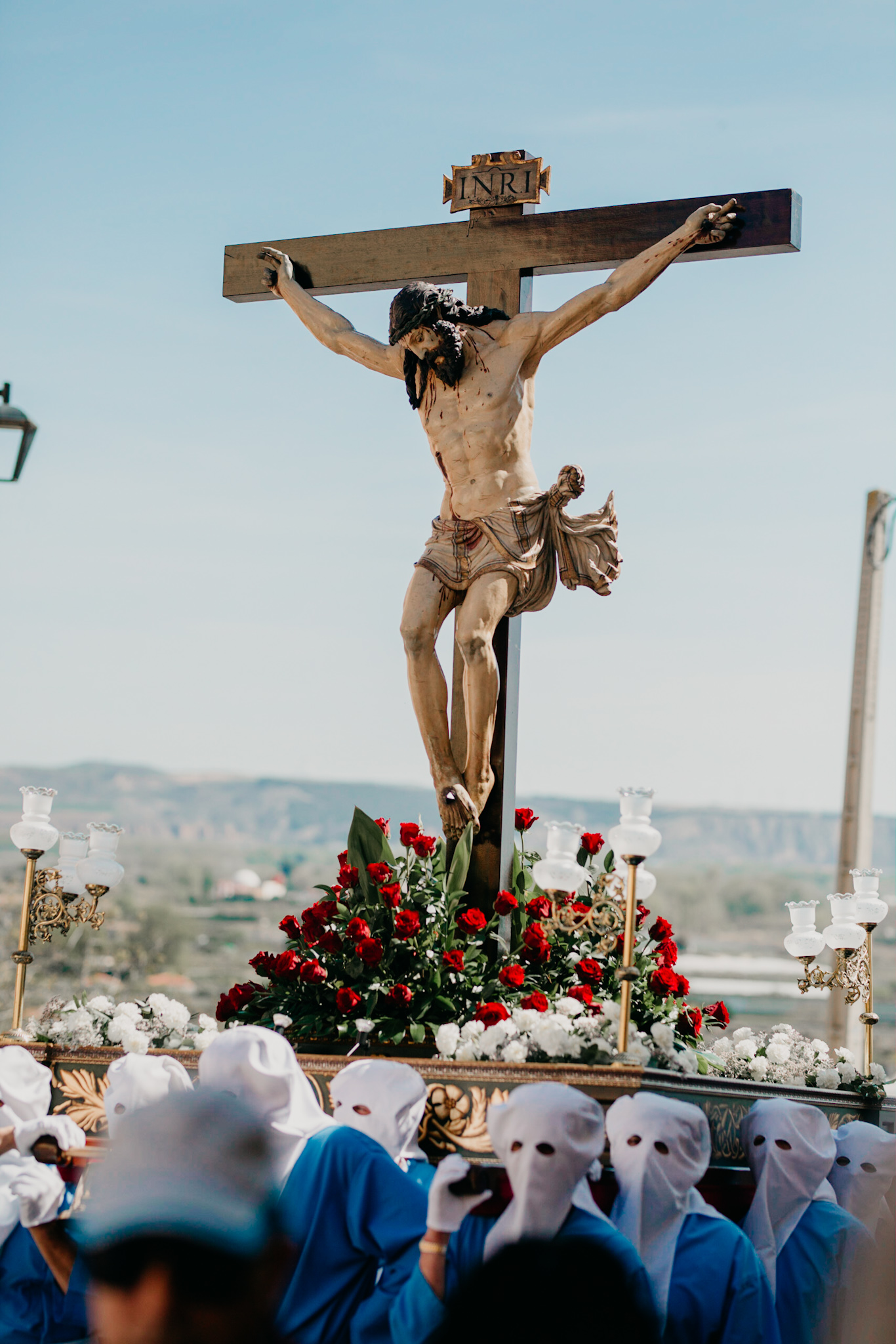
Magna Procesión del Santo Entierro
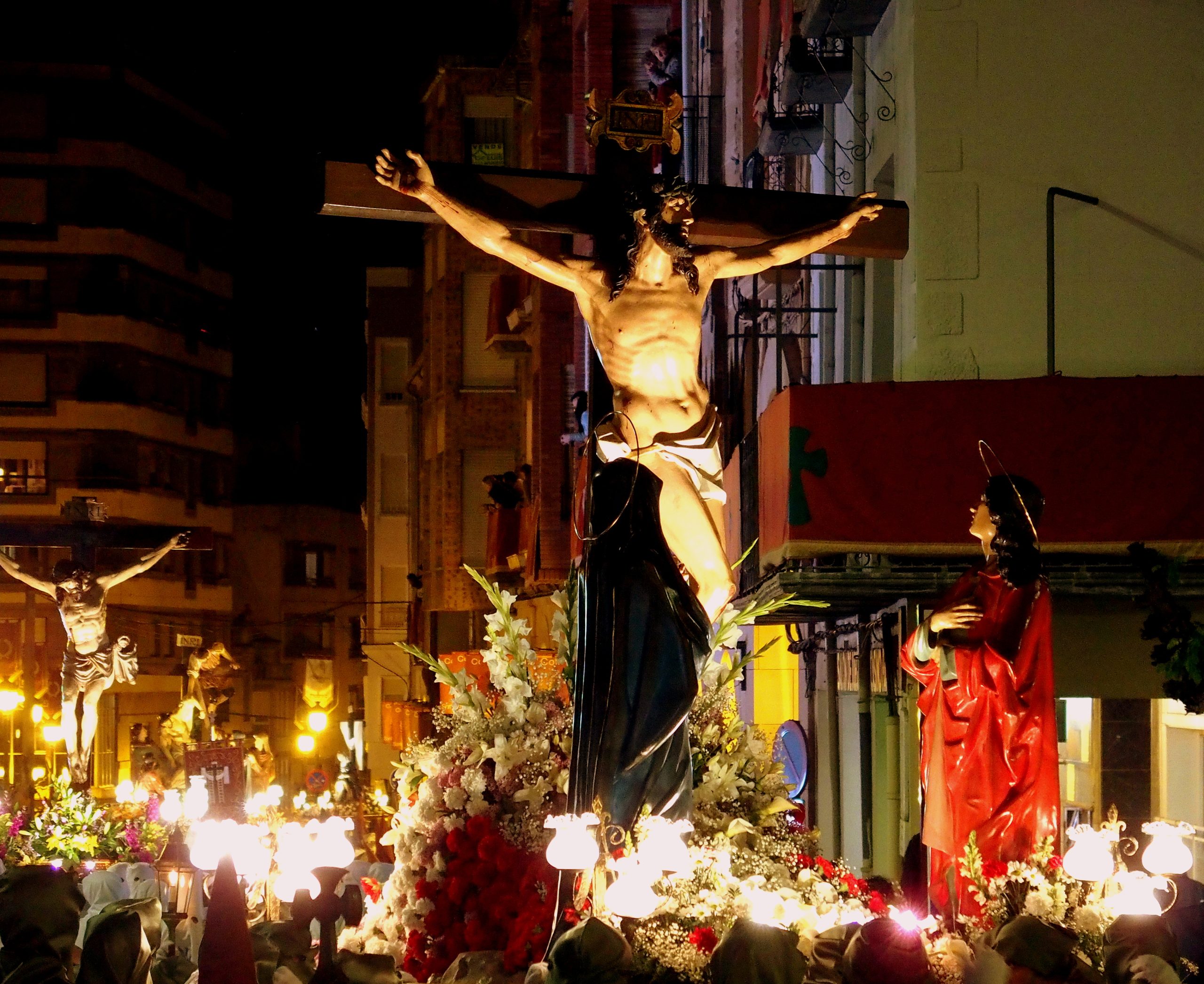
Late in the afternoon of good Friday, takes place in the great Procession of the Holy Burial, one of the processions most important and extensive of the Holy Week Calagurritana. With sixteen steps processional and the participation of more than two thousand people, is considered one of the most impressive in the north of spain. This great event serves as a true catechism visual of the Passion of Christ.
The procession is headed by the Bishop of the Diocese of Calahorra and La Calzada-Logroño, accompanied by the Municipal Corporation and the Municipal Music Band that are an essential part of the celebration.
Stand out moments such as the output of the step of the Entrance of Jesus into Jerusalem, escorted by the Local Police, in formal dress, and the step of the Tomb, which is protected by the Civil Guard, underlining the importance of and respect for this tradition in the city.
You can enjoy artistic figures of the SIXTEENTH and SEVENTEENTH centuries, including the Ecce Homo de Gregorio Fernández, the Christ of Medinaceli, the Christ of the Agony of John Bazcardo, and the Christ of the true Cross of Guiot Beaugrant. The procession, which begins at the Temple of San Francisco at 20:30 h, moves through the iconic streets of the Old town of Calahorra, ending in the same temple.
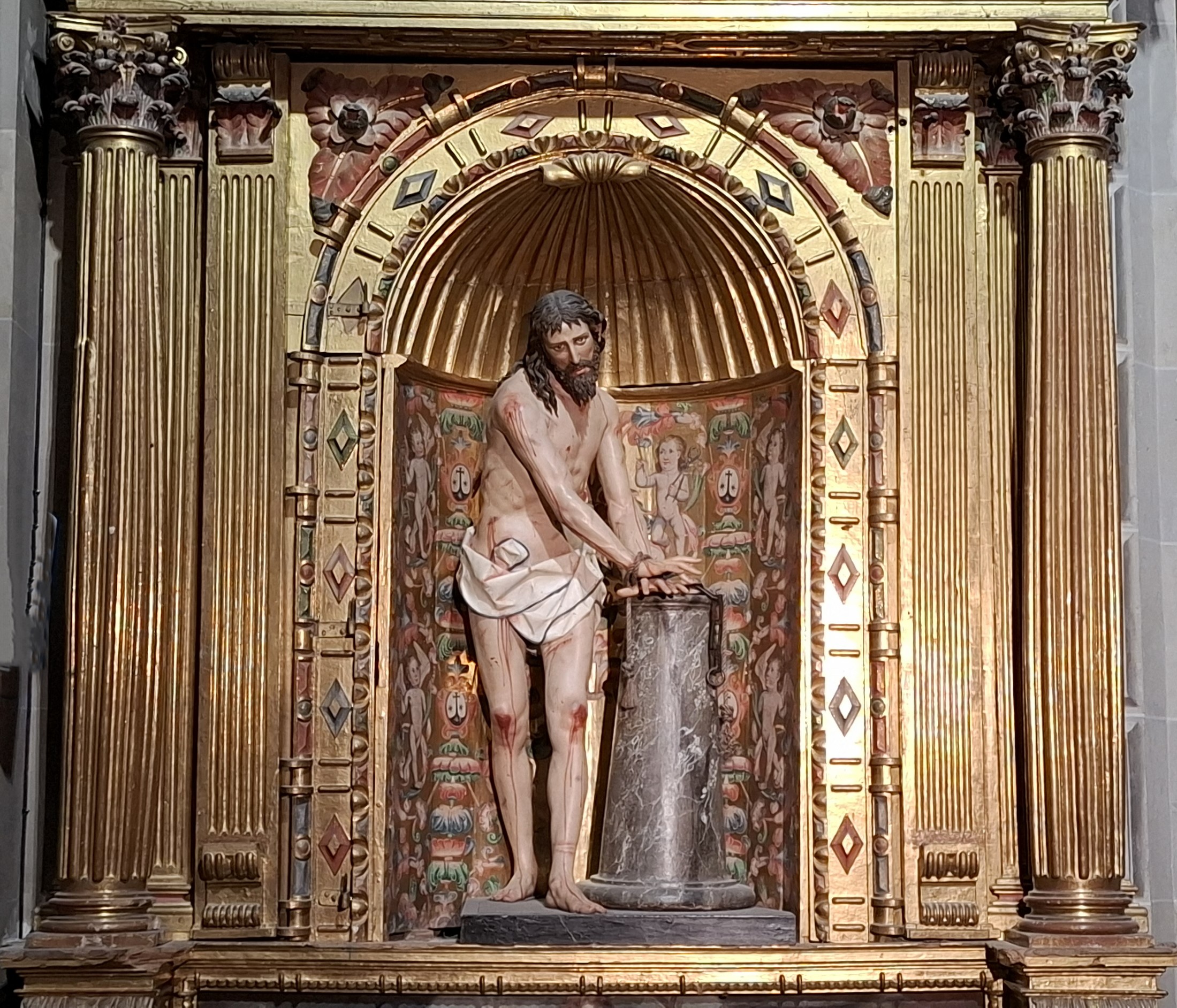
Gregorio Fernández in the imagery calagurritana
The Monastery of St. Joseph, also known as the Convent of the Barefoot Carmelites, is home to the famous “Christ Bound to the Column” of Gregorio Fernández, a baroque work of 1625 and commissioned by the nuns of the monastery. This unique size is the only one of its kind in the north of Spain and has similarities with figures in Madrid, Valladolid and Ávila, all of which are reproductions of the column pan stone brought to Rome from Jerusalem in 1223.
The procession, which begins at the Temple of San Francisco at 20:30 h, moves through the iconic streets of the Old town of Calahorra, ending in the same temple.
Lock in the 42 Steps
A unique aspect of this procession is the challenge to “lock” the steps at the end of the tour. Participants uploaded images on a single shoulder, climbing the staircase of 42 steps that binds the Costs of the Cathedral with the Rasillo of San Francisco. This symbolic act of devotion and physical effort it’s a show of great excitement, earning the applause of the audience.
The procession is headed by the Band, Drums and Bugles, followed by an order solemn of steps that includes scenes from Jesus ‘ Entry into Jerusalem to the Sorrowful Virgin. During its traditional route through the city, the images are escorted at times by the Local Police and the Guardia Civil, adding a touch solemn procession.
Order of the Procession: Band of Drums and Bugles, Book of Proceedings of the Brotherhood, Maces and Crosses in noble metals. Then parade the following steps:
- Jesus ‘ Entry into Jerusalem
- The Last Supper
- the agony in The Garden
- The Scourging
- Ecce Homo
- Judgment
- Christ of Medinaceli
- The Meeting
- The Cyrene
- The Fall
- Christ Agony
- Christ of Vera Cruz
- Descent from The cross
- The Mercy
- Holy Sepulchre
- Painful Virgin
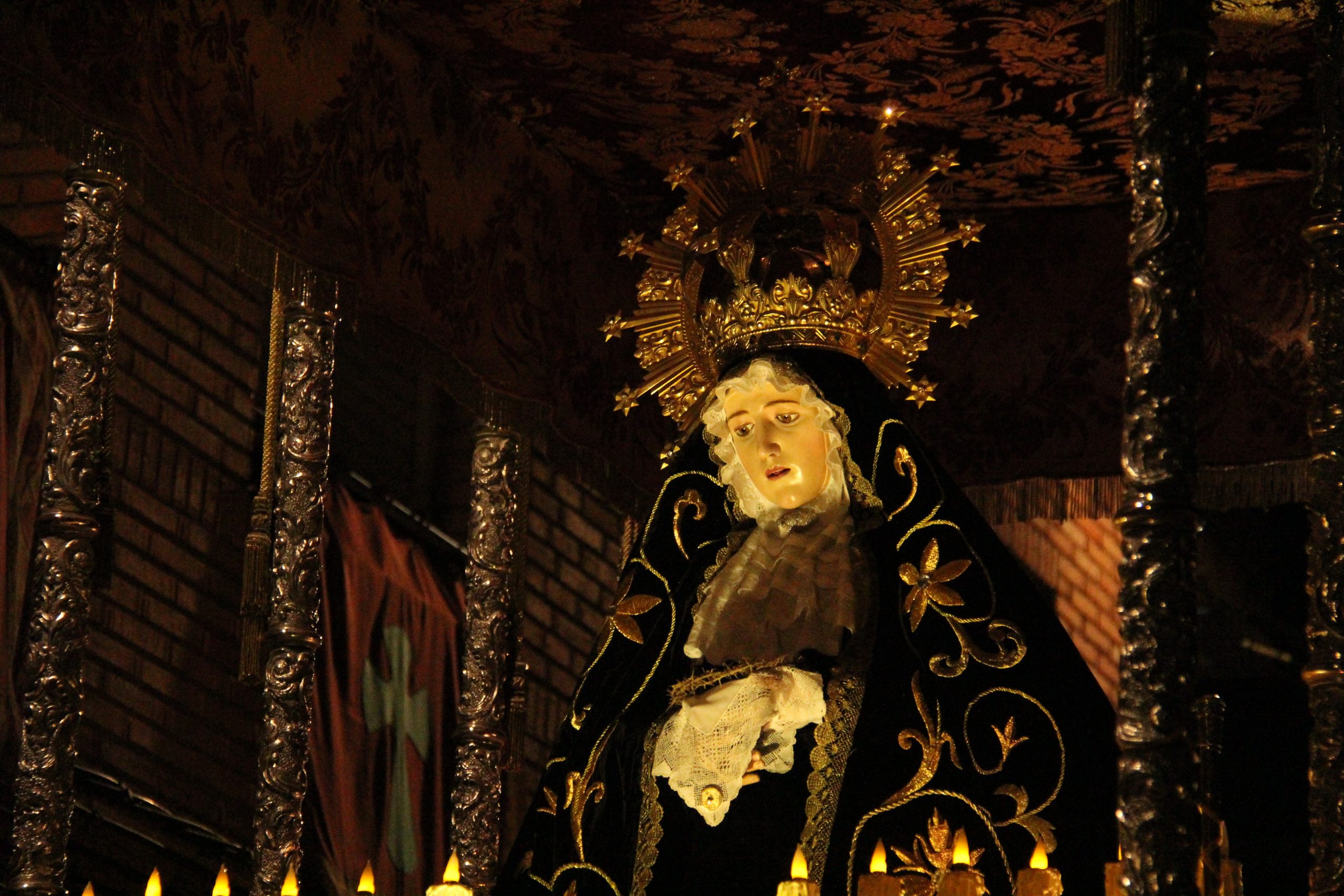
Resurrection Sunday
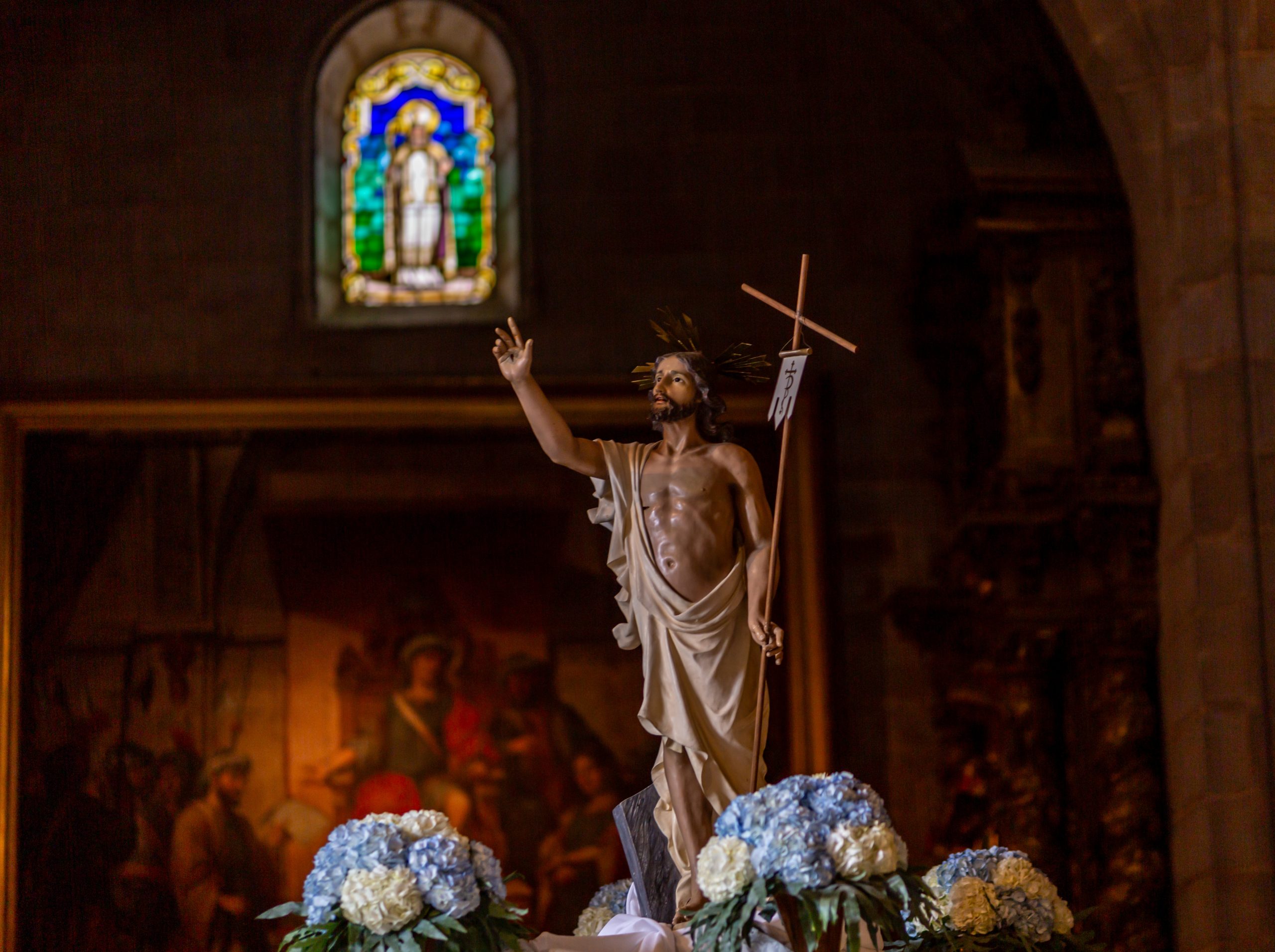
Procession of the Passover
The morning of easter Sunday and is celebrated in Calahorra the moving Procession of the Risen Christ and the Glorious Virgin, a moment of hope and renewal through the streets from the Parish of the Holy Martyrs to the Church of San Andrés.
During the tour, the procession made a stop, crowded in front of the Church of Santiago, where the traditional meeting between the Holy Risen Christ and his mother, Our Lady of the Glorious Virgin. Covered by a black cloak that is released by the sight of his Son, the Virgin makes a reverence to Jesus, as a child places a rose between his hands. This moment is accompanied by the release of doves, sound, energetic drums and trumpets, and the warm applause of the attendees.
This procession is also notable because, unlike the rest of the Holy Week, the brothers marching with the habit, but with the face exposed, without hood, symbolizing the light and the joy of the Resurrection.
Participate in this procession is a special opportunity to live in a tradition-laden symbolism and connect with the essence of the Holy Week in Calahorra.
Groups Step Living
The Cultural Association Group Step Living was born in 1982 with the first Staging of the Passion of Christ, an act which, with the passage of the years, has achieved great reputation for their quality scenic and historical accuracy. Every Holy Thursday, more than 500 people, between partners, actors, extras and volunteers, giving life to the nine scenes that comprise this stunning visual tour for the last few hours of Jesus of Nazareth.
For the quality and the rigor of their acts, the association is integrated into the Spanish Association of Festivals and Historical re-enactments (AEFRH), helping to put in value the history and the local tradition of Calahorra.
Brotherhood of the Santa Vera Cruz
The Brotherhood of Santa Vera Cruz is the institution responsible for organizing and coordinating the processions of the Holy Week of Calahorra. statutes, dated 1771, although previous existence, is one of the brotherhoods oldest in Spain. Its patron saint is Santa Elena, whose feast is celebrated on the 3rd of may with a day of mass, procession and homage to the brothers, most veterans and committed.
Currently, the association has more than 1,500 members, and is led by an Older Brother, a Board of Directors and the Abbot, a position that corresponds to the pastor of the church of St. Andrew. Among his symbols include the banner, present in all official acts, and the bell, which marks the beginning of each procession.
Throughout the year, the association develops an intense work culture and heritage: it organizes the Holy Week Cultural, with talks, exhibitions and screenings, maintains a Permanent Exhibition of Steps, restores steps processional and takes care of the costumes and the staging of the processions.
In addition, his band of drums and horns, which had been held in Calahorra in the National concentration of Bands Processional, participates in numerous events in nearby locations, bringing the spirit friars beyond the city.
MERCAFORVM
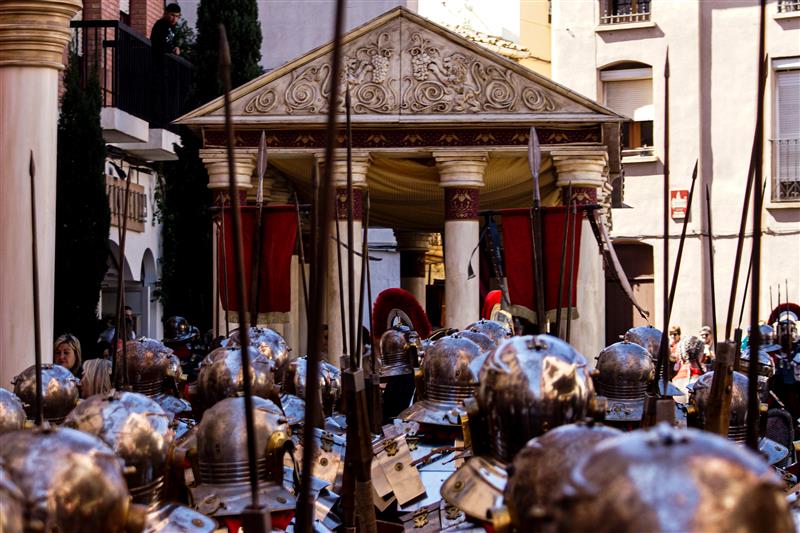
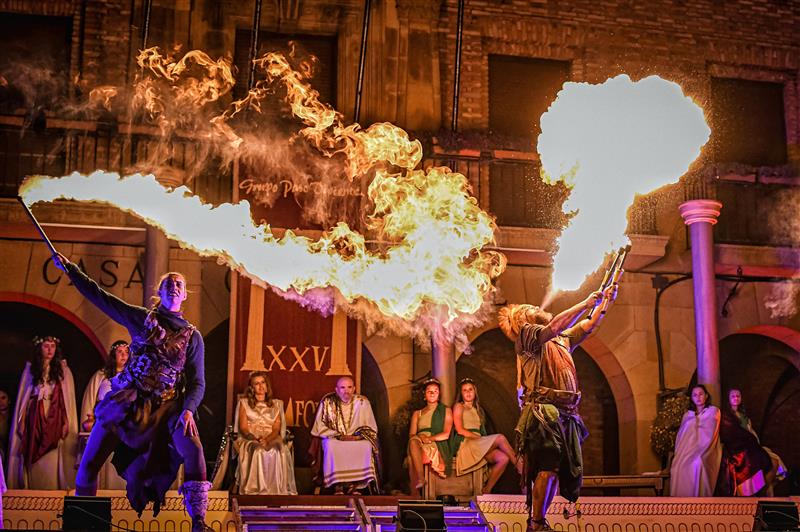
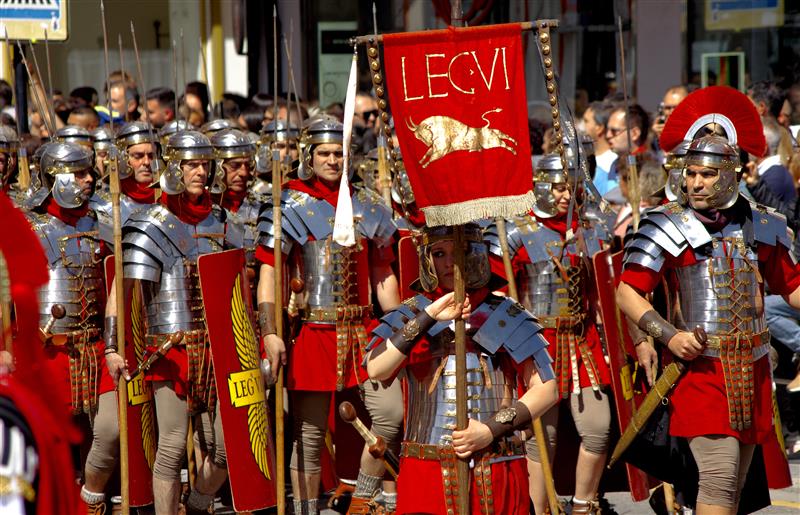
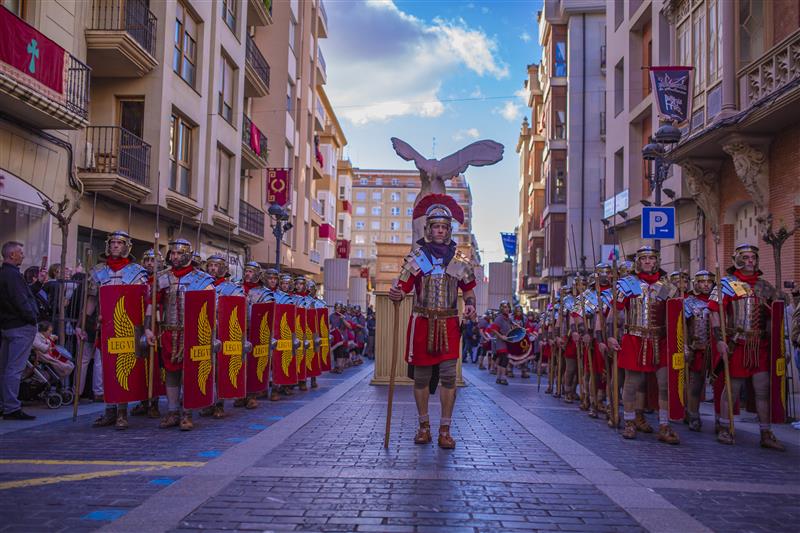
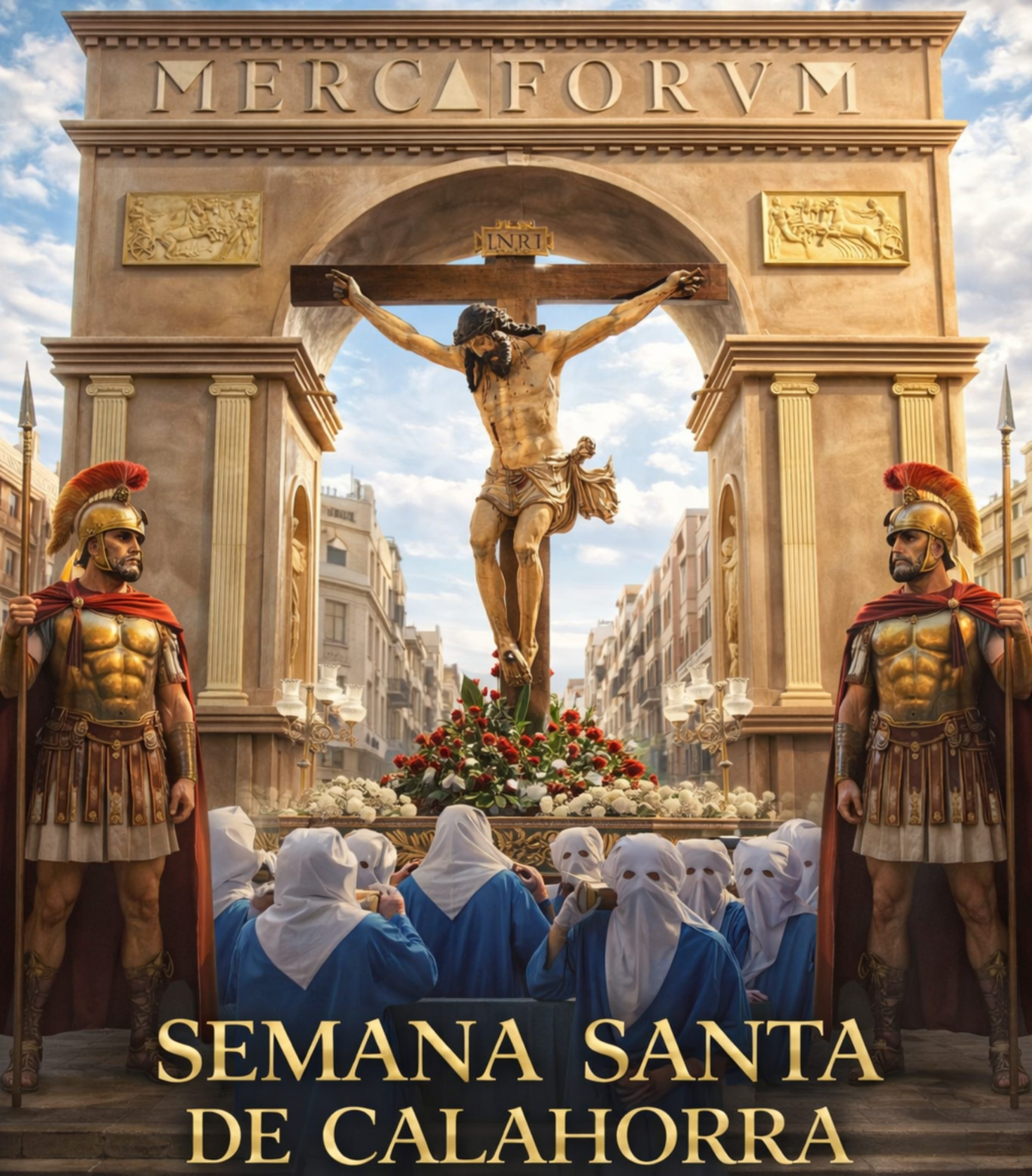
Since 1995, the Paso Viviente Group has also organised Mercaforvm, a spectacular Roman market that transforms the historic centre of Calahorra during Palm Sunday weekend, recreating in detail the ancient Calagurris Nassica Iulia. Both activities are now a cultural and tourist reference point at a national and international level.
Due to the quality and rigour of its events, the association is a member of the Spanish Association of Historical Festivals and Re-enactments (AEFRH), contributing to the promotion of the history and local tradition of Calahorra.
What will you find in Mercaforvm?
- Crafts and local product: potters, blacksmiths, tanners and craftsmen of the textile or the power selected by the quality and authenticity of its products.
- Roman pottery: replica, made using the original techniques of the famous potter’s local Gaius Valerius Verdulo, whose works are preserved in the Museum of the Roman period.
- Theatrical performances: scenes dramatized as The dreams of Claudia Procula that enrich the historical narrative of the event.
- Roman legions: parades of the LEGIO VI VICTRIX along with troops for children and youth in a careful staging and military.
- Live workshops: participatory activities such as the minting of currency in the Office Monetalis, thanks to the collaboration of the Association of Friends of the History of Calahorra.
- Exhibitions and animation: live music, traditional games, gladiators, birds of prey and characters itinerant people that give life to the forum.
- Scenery of large format: reconstructions to actual scale as the Arc de Triomphe, the impluvium, temples, friezes, sculptures, columns, mosaics, and military camps that reproduce rigorously the urban planning of the classic Roma.