Calahorra is a real archaeological treasure that reflects the passing of different civilizations and the events that have shaped its history over the centuries. The city presents an overlay of architectural structures of various historical eras, which creates a context fascinating to archaeological exploration. However, this wealth has also hindered the excavations, as to get to know the Calagurris Iulia roman is necessary to overcome the layers of successive constructions.
Founded under the patronage of Augustus around 30 to.C., Calahorra was established as a roman town that developed its town-planning a lo largo del siglo I d.C., encompassing what is today known as the old town. Thanks to its strategic location on the road of Italy in Hispaniis the city became an important commercial enclave, from where it departed routes to towns like Numantia and Pamplona. In this period, Calagurris began to equip themselves with defensive elements and complex infrastructures, including the city walls, public buildings, and water supply systems, such as aqueducts and sewers.
In addition to its urban development, the city also constructed villas in their rural surroundings, that stand out as centers of agricultural exploitation and craftsmanship. For example, the alfar romano de La Maja active in the first century, produced ceramics and glass, some of which are associated the names of potters of renown.
However, the prosperity of Calagurris was threatened by economic and political crises at the end of the third century and the invasions of germanic peoples from the fourth century, which led to the abandonment of many of its structures and the transformation of the urban space.
Major Archaeological Sites
The Sequeral
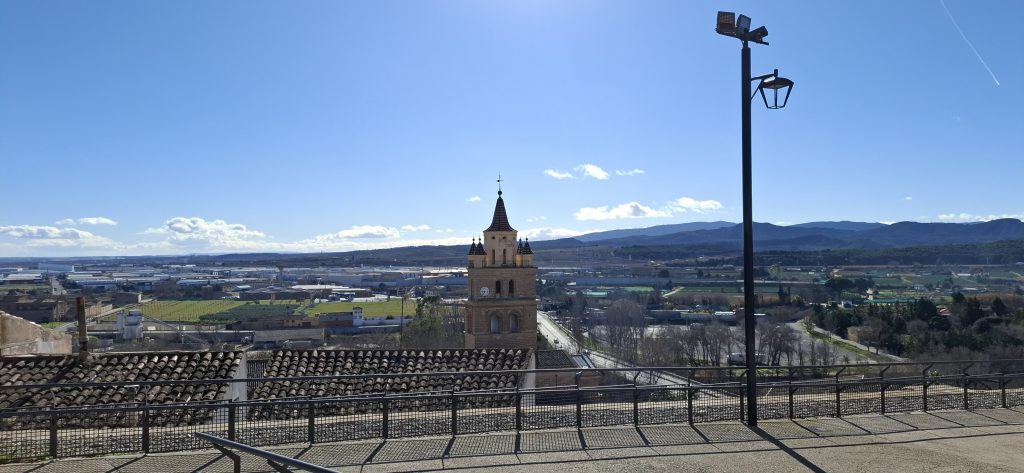
From the Viewpoint of San Francisco, also known as the Rasillo of San Francisco, you’ll be able to enjoy the spectacular views of the city and some of its most iconic buildings, like the Cathedral, the sanctuary of El Carmen and the Shrine. In addition, you will have the opportunity to observe the remnants of “The Sequeral”, the base of an ancient tower that belonged to the roman wall of the first century ad.C. This important vestige is located in the old town, just behind the San Francisco church and next to the Municipal School of Music, and is visible from the viewing platform, offering a unique connection between the present and the historical past of Calahorra.
Walls
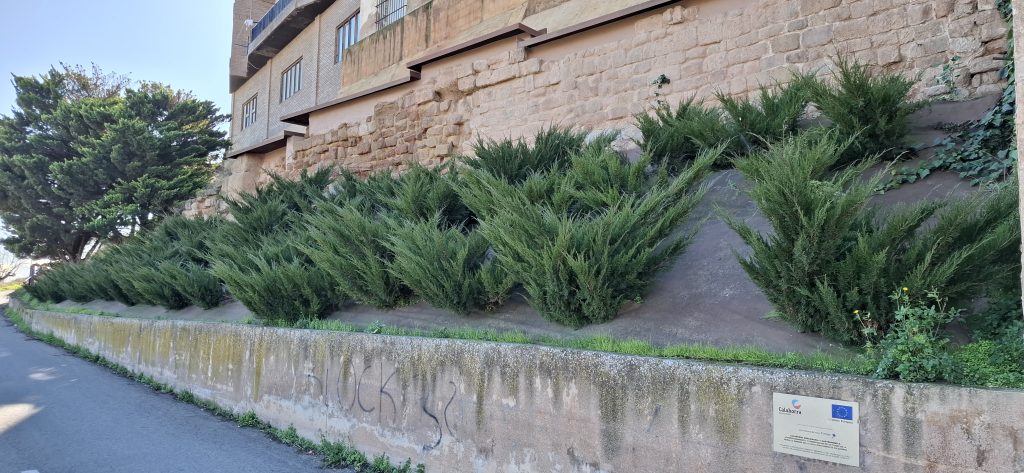
The walls of Calahorra are witnesses of an age of transformation in the urban organization of Calagurris, which happened as a consequence of the economic and political crisis of the Roman Empire in the second half of the third century, along with the first invasions by germanic peoples to the beginning of the fourth century. To adapt to this new reality, there was a second stretch of the city walls, whose remains can still be seen in the street Carretil.
The construction of these walls in the III century resulted in the delimitation of urban areas, which were outside the walls, leading to the abandonment of several buildings, such as those found at the nearby site of the Clinic. This change in the organization of the space reflects the fragility of the city in a period of profound social and political change.
Roman circus
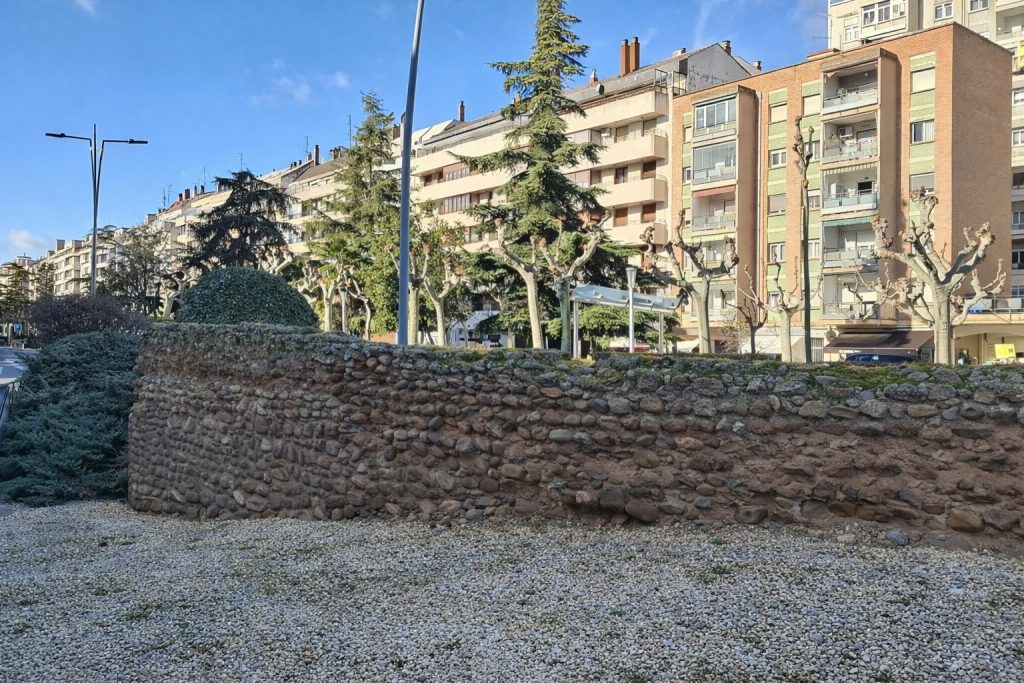
The roman circus of Calahorra, one of the infrastructure that is most emblematic of the ancient Calagurris, was an impressive building for chariot races. This monumental space occupied what today is known as the paseo del Mercadal and the apples are adjacent. Built in the I century, its design was the famous Circus Maximus of Rome, being a reflection of the splendor and importance of Calagurris in his time.
Although today there are few visible remains of the circus, at the end of the walk you can see a curved wall of masonry which forms part of the floor north of the building. In addition, in the Park of the Was High, in front of the Parador, has moved a pipeline ornamental which was used for the evacuation of the waters of the sand used in the races, a vestige of the grandeur of this playful space.
The municipalization of Calagurris in the last quarter of the first century a.C., granted by the emperor Augustus, marked the start of an urban development that included the construction of major public infrastructure projects, among which stood out the circus. This space provided not only entertainment, but also a place of meeting and socializing for the population.
Although the remains of the circus are not evident to the naked eye, it has managed to rebuild its plant and some of its features, allowing visitors to imagine the grandeur of this monumental building that once dominated the social and cultural life of Calahorra.
Aqueduct
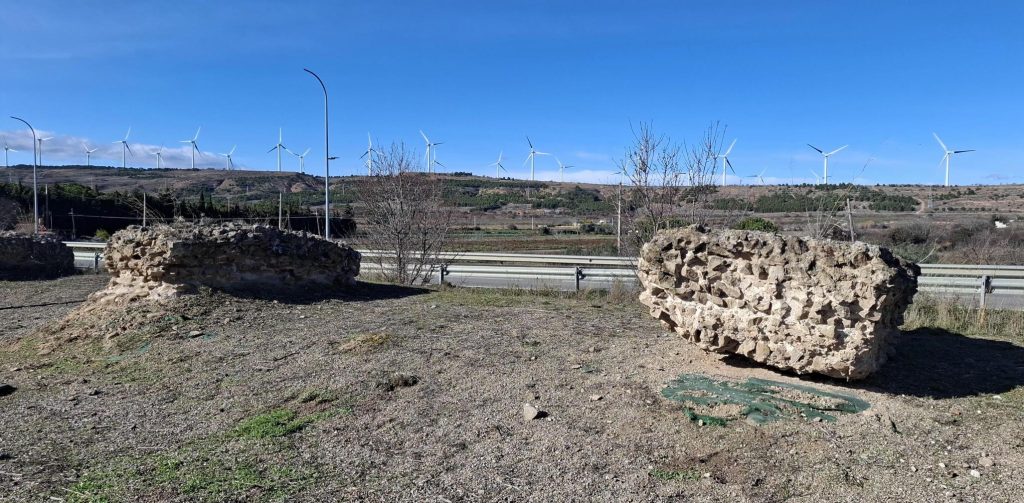
The foundation remains of the aqueduct that supplied water to Calahorra during the roman period from Sierra Lahez, located in the valley of Ocon, approximately 30 miles from the city. This vestige is located in the outskirts, near the Road from Arnedo, adjacent to the site of the First Iron Age of Sorbán. It is within walking distance via the Green Route, which allows visitors to explore this interesting part of the historical heritage of Calahorra.
Las Medranas
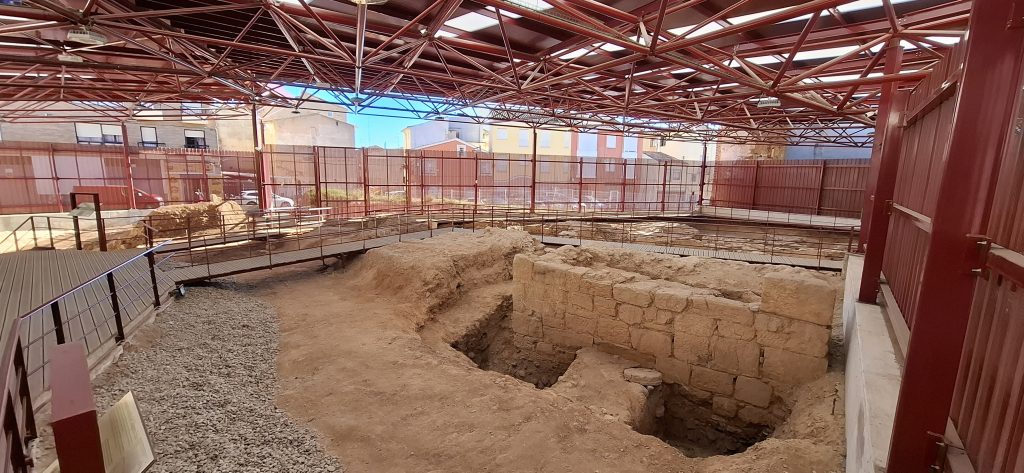
This interesting archaeological site is located on the site where stood the house of the family Medrano. This site revealed the remains of two eras, clearly differentiated, which offer a fascinating insight into the history of Calahorra.
In the first place, we find a tower century roman I, which forms part of the route of the defensive wall of the city. This tower, of rectangular plan and is built of stone blocks, is based on a pit in the shape of a “V” that corresponds to the first roman settlement of a military nature. This moat, which was filled in after the abandonment of the settlement, represents a fundamental part of the defense of Calagurris in his roman period.
In addition, the site is home to the structures of wine presses dating back to the SEVENTEENTH and EIGHTEENTH centuries. These remains suggest that Calahorra was an important center of wine production, with significant activity in the EIGHTEENTH century. However, this burgeoning industry fell into disuse after the phylloxera plague that devastated vineyards in the late NINETEENTH century. As a result, many of the wineries were abandoned or reused, possibly converted into stables or horses.
The Medranasas not only allows us to explore the roman history of Calahorra, but it also connects us with its agricultural legacy and wine, reflecting the evolution of the city through the centuries.
The Dam
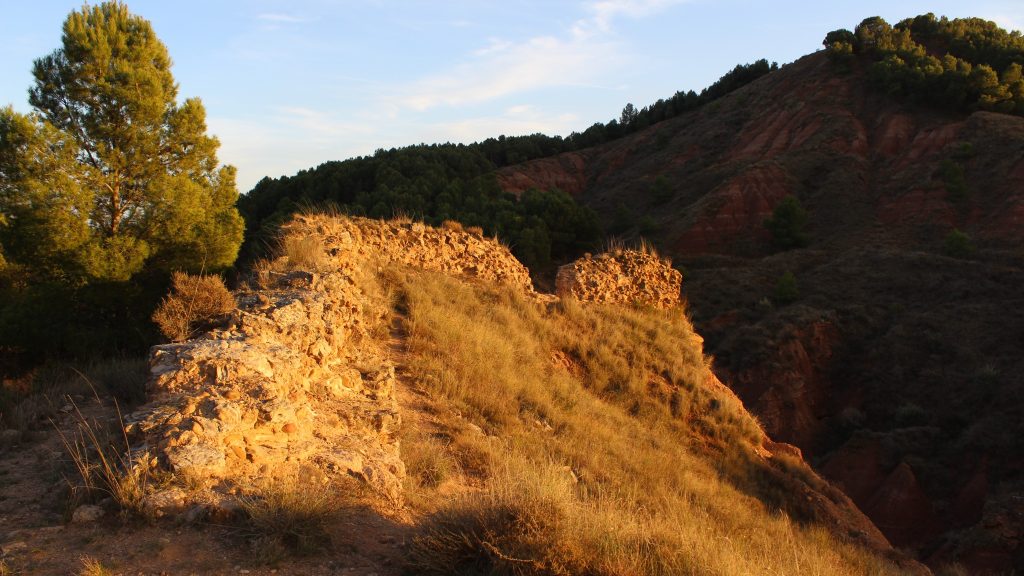
Located on the outskirts of the city, in the place of the Treble and within the Natural Way of The Pass are the remains of an old dam closure of a reservoir height-imperial. This building was designed to supply water to part of the area centuriada of Calagurris, located between what are now Calahorra and Rincón de Soto. This vestige is an important reminder of the sophisticated hydraulic engineering of the roman era, which allowed the development of agricultural and urban, of Calagurris.
The Clinic
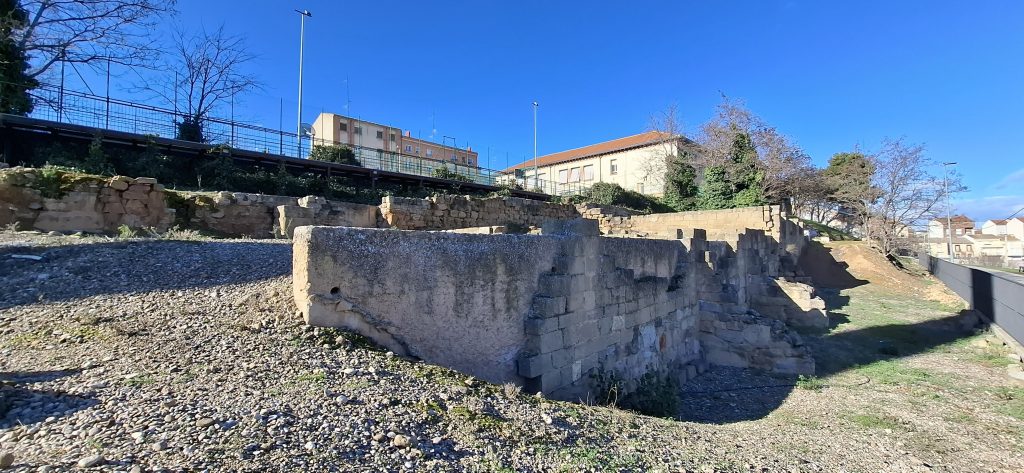
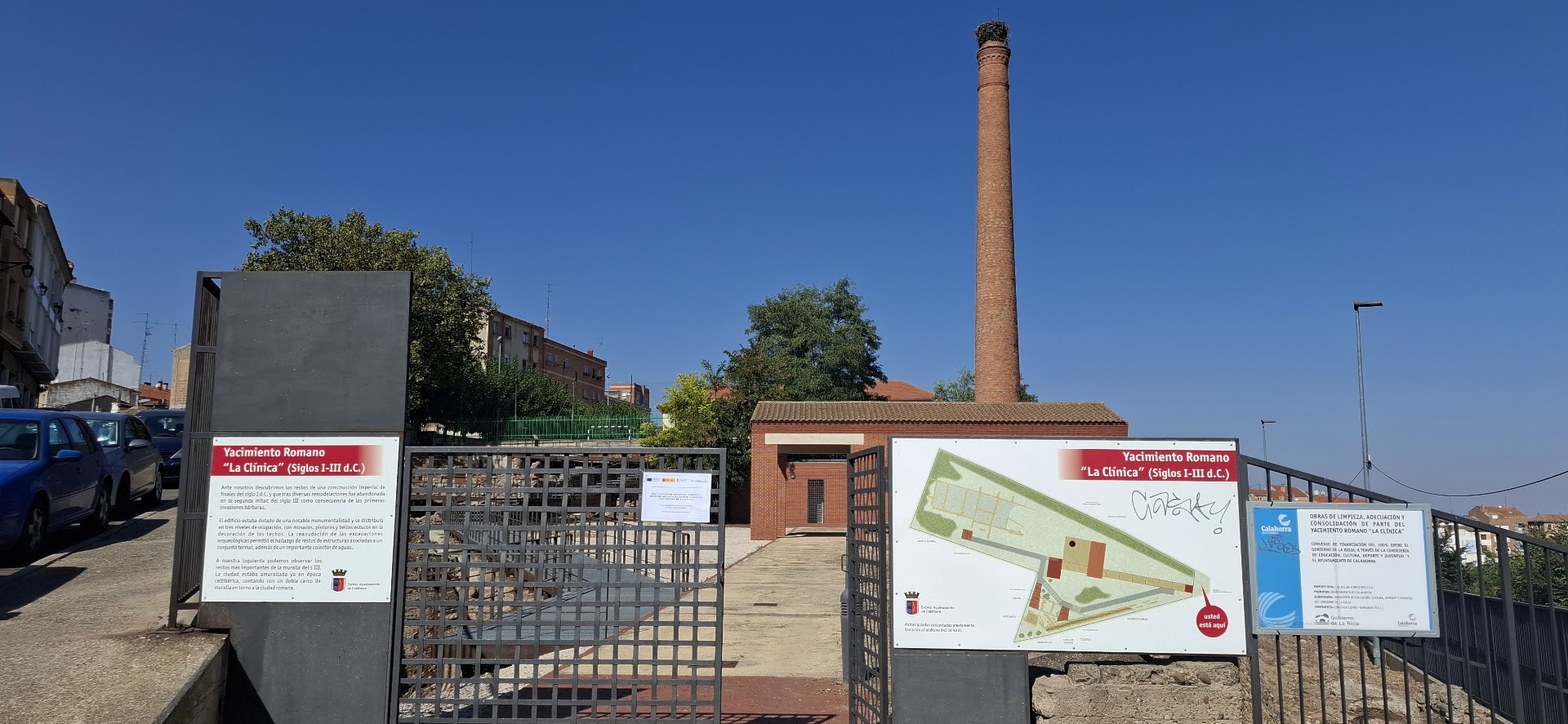
The archaeological site of The Clinic, excavated during the second half of the TWENTIETH century and first decades of the TWENTYFIRST, this museum is a site of great historical significance that has the remains of an important building of a public nature, and a thermal set.
Building roman
Built in the third quarter of the century I d.C., this monumental building lost its functionality to the middle of the third century. Its remarkable structure is divided in three levels or terraces of occupation, with impressive mosaics, paintings and elaborate stucco adorning its walls. Due to the design of the part preserved, and their adjacent thermal set, it is suspected that it was a public building rather than that of a domus, or house private. The valuable paintings, ornamental stucco and other household items discovered during the excavations can be seen today in the Museum of Romanization, which reflects the cultural richness of the time.
Thermal set
The thermal complex of The Clinic includes various facilities, among which we identify a praefurnium (oven) and a hypocaustum (heating system), as well as the remains of a swimming pool. It has also been found of a drainage channel that leads to a great collector, designed for managing wastewater and stormwater, thus allowing for an adequate evacuation and preventing the degradation of the slopes of the hill calagurritano. The conserved stretch of the collector reaches up to 35 meters in length and presents an ingenious change of level, achieved by four sturdy steps.
The Lady
Among the findings highlights of the excavations is located the famous “Lady of Calahorra”, a sculpture of white marble which was discovered in the 1930s during the foundation of the Rural Centre of Hygiene. This sculpture, which dates back to the century II d.C., presents an idealized representation of the seen features such as a thick neck, a chin robust and a nose budding, that have led some experts to be considered male character, type youth. However, other analysts include elements such as the treatment of the hair and the straight nose, suggesting a female representation related to Minerva Peaceful. This figure has become an iconic symbol of the city of Calahorra, testifying to the cultural and artistic richness of its past.
Sewers
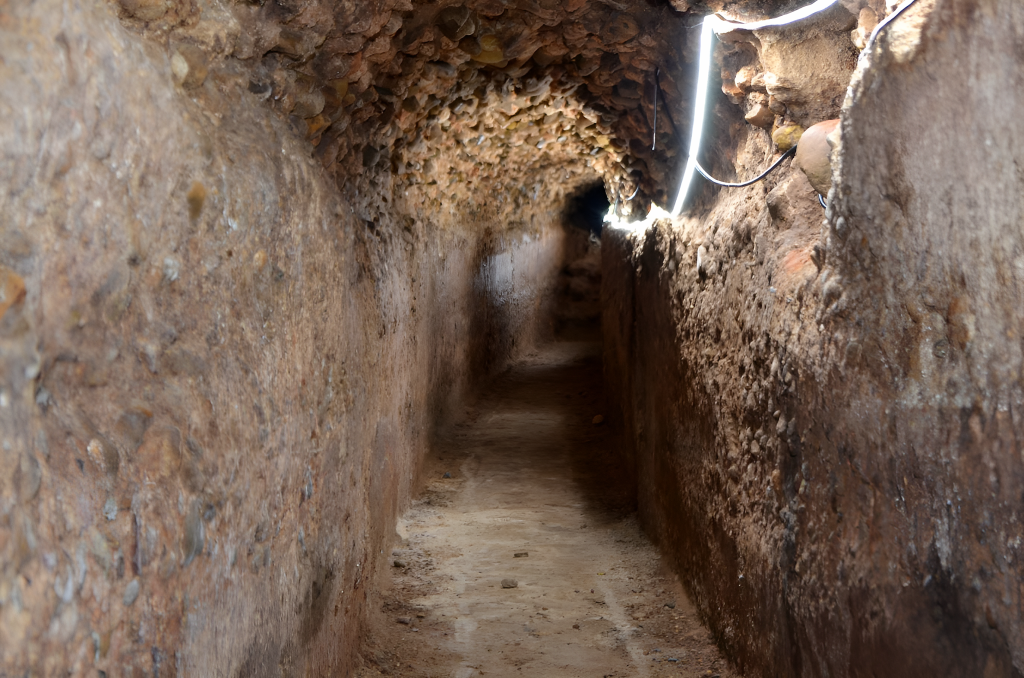
This notable architectural work of the century, I d.C., built in opus caementicium, that remained in use until the early fourth century, is located on St. Andrew street. Currently, the sewer line dug has a length of about 50 meters, but is blinded in both ends by the accumulation of sediments over the centuries.
The building features walls of 43 cm thick, with a spacious width of 64 cm and a height of 1.32 metres, ending in a barrel vault. Along one of its walls can be observed gaps, which were probably created for the lighting through skylights, thus facilitating the maintenance and cleaning of the sewer system.
Its path follows the direction of the Decumanus Maximus, oriented from east to west, with a slight slope towards the east. This ingenious system of sewers was in charge of evacuating the waste water of the baths and of the surrounding buildings, which denotes the advanced infrastructure of sanitation of the old Calagurris.
Discovered in the seventies, the sewers were the subject of excavation and study, thanks to the joint effort of the association of Friends of the History of Calahorra and don Moses Arnáiz, owner of the sun that provided access to this interesting site. From 1995 to 2002, the sewers were open to the public, and now, under municipal property, you are carrying out work for the re-opening them to the visits.
In addition to the sewer main, have been discovered in other sections of the pipes of a smaller size at different points of the town. These findings underscore the importance of Calagurris in the context of the Roman Empire, because few cities hispanic had a network of sanitation as sophisticated as that of Calahorra. Although it is believed that there was a network of underground sewerage that would cover all of the municipality, this network of sewers allowed for efficient evacuation of water, supplemented by an external system for remote areas.
The study of the pipes has enriched our knowledge about the daily life of the inhabitants of the ancient Calagurris, revealing important archaeological discoveries, as an earring of gold that was on display in the Museum of the Roman period. This site is a testament to the ingenuity and the organization of the urban infrastructure of the classical period in Calahorra.
St Andrew's Arch
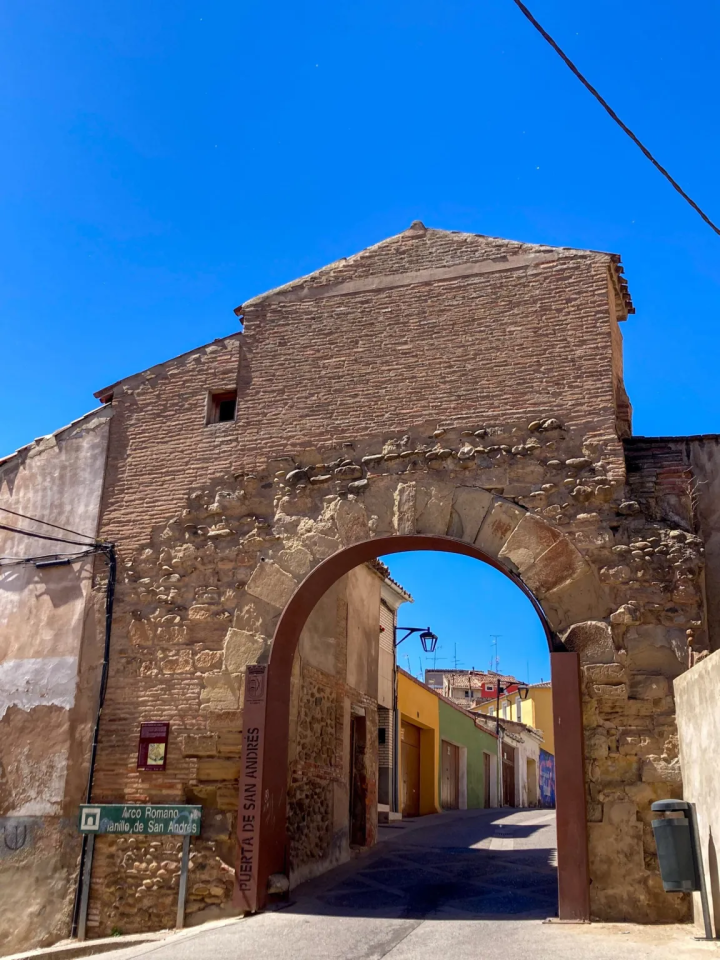
Located in the Planillo of San Andrés, the Arc of San Andrés, also known as the Arch of the Planillo, is a landmark building that gave access to the medieval city of Calahorra. This arc, which is generally attributed to the roman period, is the only one of the entrance gates to the walled enclosure that has remained standing until our days.
Structurally significant, the arc can be integrated on a building later that houses the image of the Virgin of the Planillo, also known as the Virgin of Lobera. This tradition of placing images in the accesses to the populations had a purpose of protection, providing a sense of security to the inhabitants of the city.
Through the arch, visitors access the Planillo of San Andrés, a space that not only offers a historic view, but it also houses a tribute to Don Pedro Gutiérrez Achútegui (1880-1973), an illustrious son of Calahorra and passionate researcher of local history. His bust stands as a recognition of their contributions to the study of the history of the city.