
Some come to buy the best footwear at the best price, while others seek to learn more about this city with a long tradition of shoemaking. Others arrive looking to immerse themselves in our history, buried in the characteristic reddish landscape that surrounds us. Some begin their visit in the Cidacos Valley, delving into the great palaeontological legacy of La Rioja Rupestre. Sometimes the reason for the visit is linked to the calendar: festivals, celebrations, sporting events... activities that can be combined with our gastronomy or our nature. The reason for your arrival in Arnedo doesn't matter, what we want is for it to leave its mark on you.
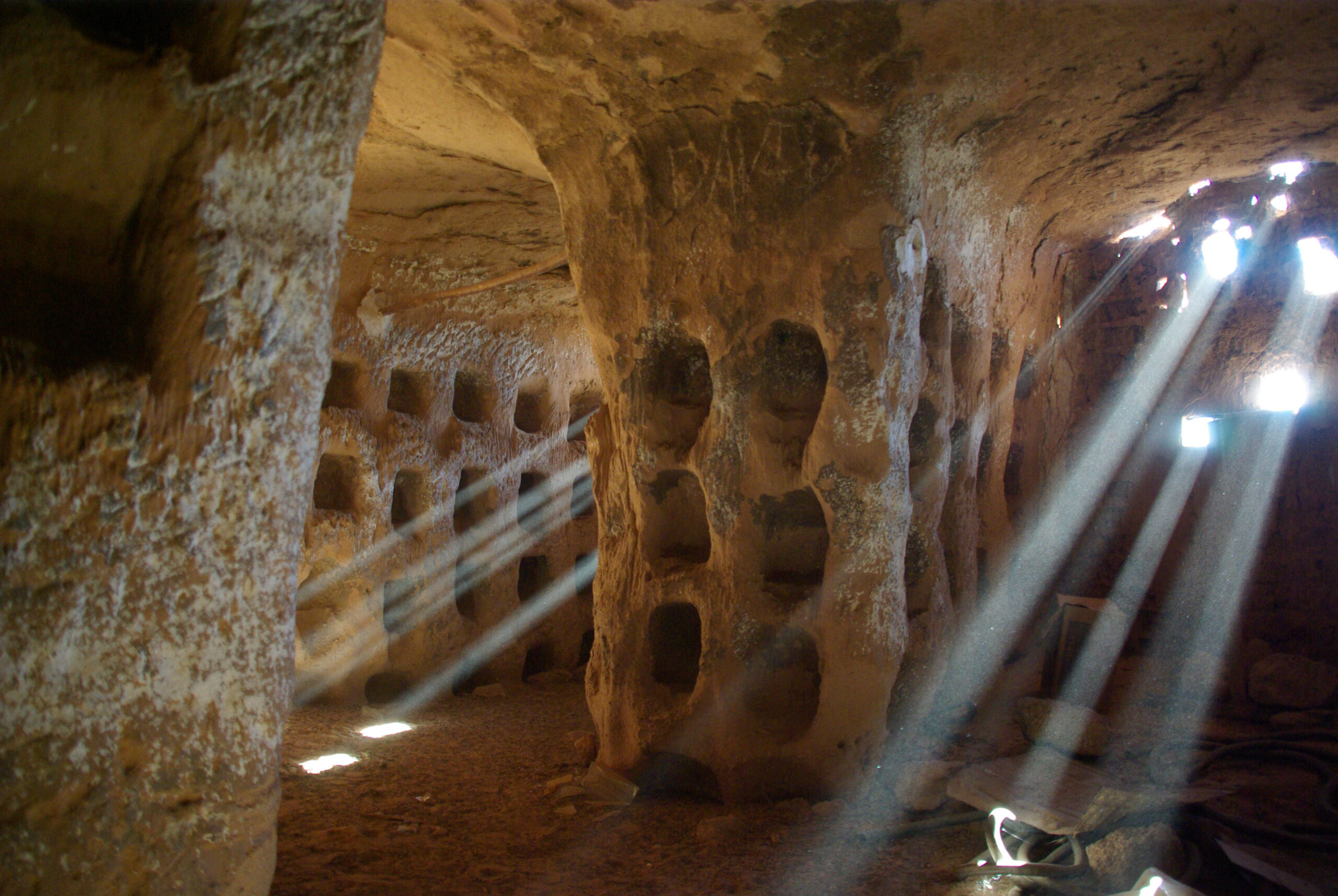
They form part of an important rock art heritage, undoubtedly the most unique of our resources. This complex excavated under the Cerro de San Miguel tells us about the relationship between man and the earth for centuries. Your journey will allow you to see and feel the history of these caves.
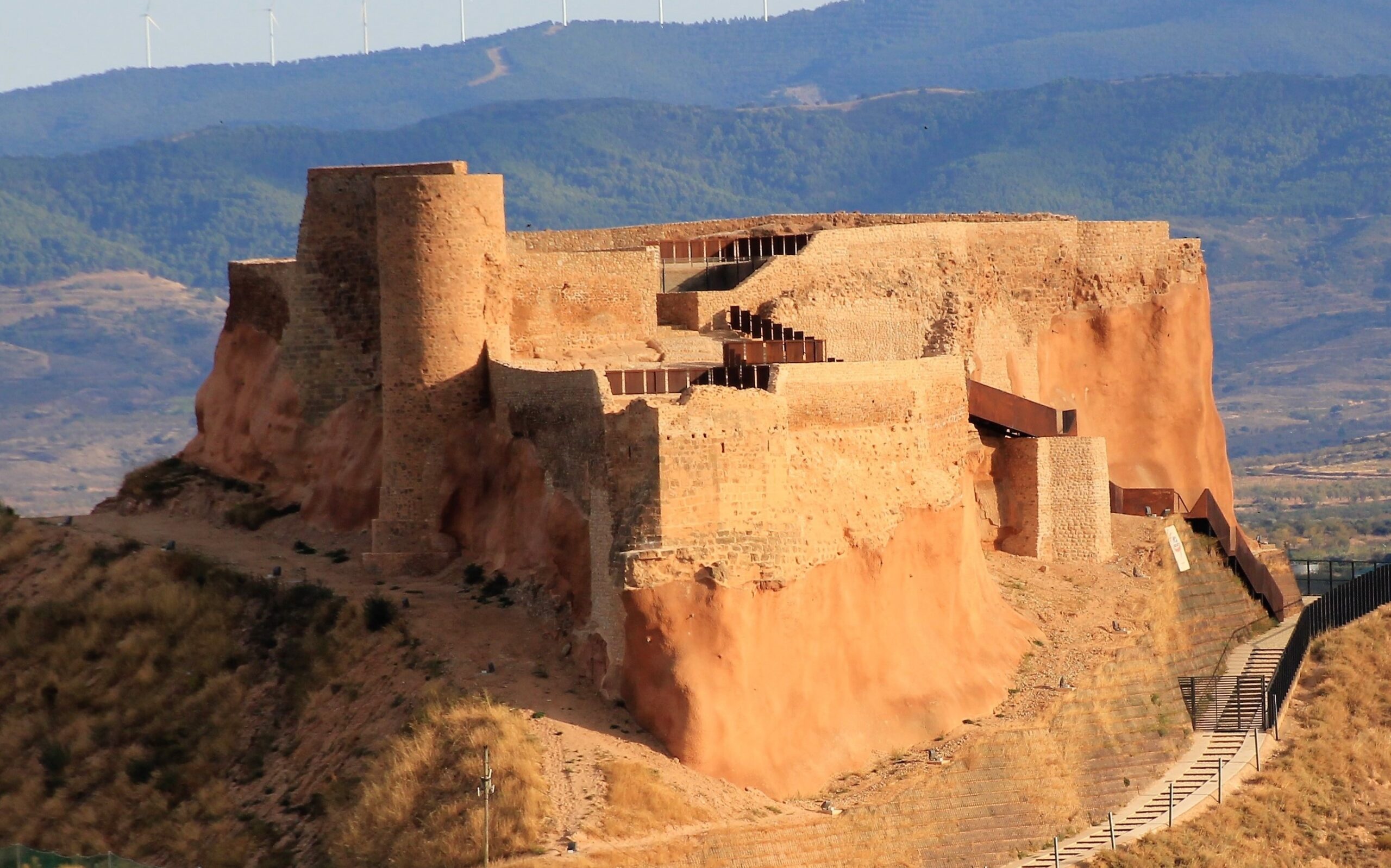
Nestled on the hill that bears its name, this building dates back to the Muslim era, when the Banu Qasi ruled these lands. Its commanding view over the valley made it an important defensive stronghold, playing a key role during the era of feudalism.
Aguilar del Río Alhama is located in the southeast of La Rioja, very close to Navarre and Aragon. With around 470 inhabitants, it keeps its agricultural tradition alive, growing asparagus, pears, almonds and fruit, alongside livestock farming. Of Celtiberian origin, with traces of the Roman and Visigothic periods, it preserves the valuable archaeological site of Contrebia Leucade, accompanied by an interpretation centre that brings its history to life. The local heritage is highlighted by the Renaissance church of La Asunción (16th century), with Baroque and Gothic altarpieces, the Romanesque chapel of Valvanera (12th century) and the remains of the medieval castle. Its natural surroundings invite visitors to explore routes such as the Camino Verde del Alhama, where griffon vultures and rugged landscapes surprise visitors. History, nature and authenticity make Aguilar a unique rural destination.

It is one of the most important archaeological sites in La Rioja. The nature, monumentality and exceptional state of preservation of its remains make Contrebia Leucade an essential reference point for learning about the indigenous communities and their resistance to Rome.
Its interior is covered with an elegant star-shaped ribbed vault and has a Renaissance-style façade. It houses valuable works of art, including Baroque and Neoclassical altarpieces, as well as an 18th-century recumbent Christ and the Virgin of Los Remedios, a delicate 14th-century Gothic carving.
Arnedillo is located in the Upper Valley of the River Cidacos, declared a Biosphere Reserve by UNESCO in 2003. At an altitude of 651 metres and covering an area of 48 km², it forms part of the Arnedo region and is 62 km from Logroño and 27 km from Calahorra. Its surroundings, which include Peña Isasa, Peñalmonte and Las Peñas de Arnedillo, are part of the Natura 2000 Network, offering landscapes of great ecological value and mountain trails. The first references to the town appear in the Middle Ages: Count Fernán González mentioned it in the 10th century as Arnietello. From 1170 onwards, it was a royal town by privilege of King Alfonso VII. Today, Arnedillo is known for its thermal waters and its privileged natural environment.
Arnedillo is famous for its mineral-medicinal thermal waters, rich in chlorides, sulphates, calcium, magnesium, iron, silicon and rubidium. They are hyperthermal and slightly radioactive, with an original temperature of 52.5 °C, and spring forth alongside the River Cidacos.
This beautiful place stands out for its cultural and historical value in the Cidacos Valley. Located on a natural ledge on the Santa Eulalia Somera mountain, it features carved niches that extend from floor to ceiling, forming a striking, almost perfect checkerboard pattern.
Autol, in the basin of the river Cidacos river and at the foot of the sierra de Yerga, has about 5,000 inhabitants and a strong tradition of canning and food. Its great emblem cheap are the Picuezo and the Picueza, two towering monoliths of sandstone that dominates the park of the same name, next to the river Cidacos river and surrounded by the remains of the castle and an old roman bridge, crossed today by the Green Way of connecting with What is. This is a very varied gastronomy, cultural richness, and a wide range of hostelry consolidate Autol as a reference in The Rioja Baja. Each November, the Days of the Mushroom and the Mushroom attract visitors from across Spain, making the people in a place where tradition and taste, is celebrated in a big way.
Two imposing sandstone monoliths, 45 metres high and approximately 10 and 30 metres in diameter, respectively. True geological wonders, erosion and the passage of time have given them shapes that evoke a man and a woman, standing tall and vigilant, surrounded by legend and nature.
Located in the highest part of the old town, next to the castle, it dates back to the 16th century. Its construction combines ashlar stone up to half its height and a Mudejar-style brick finish. On 3 November 2021, it was declared a Site of Cultural Interest (BIC), consolidating its historical and architectural importance.
Cervera del Río Alhama is the capital of the Alhama-Linares region, located at the foot of the Sierra del Alcarama mountains and bathed by the Alhama River. Its town centre is divided into two neighbourhoods, Santa Ana and San Gil, and its municipal area includes the towns of Cabretón, Valverde, Valdegutur, Rincón de Olivedo and Ventas del Baño. The local economy combines traditional crafts, such as the manufacture of espadrilles, with agriculture, livestock farming and the service sector. Part of the Biosphere Reserve, Cervera del Río Alhama offers beautiful nature trails, a rich historical and artistic heritage, with a castle and religious temples, and the possibility of enjoying astronomical tourism, thanks to its spectacular starry sky.
The original centre of the town, its construction dates back to the Muslim period or even earlier, although it was renovated several times between the 14th and 19th centuries. Today, vestiges from the 13th and 14th centuries remain, such as the Cueva de la Luna (Moon Cave), fragments of the wall and ancient viewpoints offering panoramic views of the valley.
A 12 km linear route that allows walkers and visitors to explore the Alhama river valley, enjoying its rich flora and fauna. It begins in La Albotea and ends in Aguilar del Río Alhama, passing through notable points such as Cervera, Pozo Largo, Contrebia Leucade and Inestrillas.
Located in the southeast of La Rioja, Igea is a small municipality steeped in history, natural heritage and paleontological wealth. Surrounded by rugged landscapes and gentle mountains, it offers visitors the opportunity to immerse themselves in a peaceful environment where the past and nature coexist in harmony. It stands out for its valuable fossil legacy, with numerous sites that make it a benchmark for scientific tourism in the region. In addition, its historical and artistic heritage, such as the Palace of the Marquis of Casa Torre or the parish church of La Asunción, reflect its importance in centuries past. Strolling through its streets is like travelling back in time, discovering dinosaur footprints and enjoying the rural charm of La Rioja.
Igea es uno de los epicentros paleontológicos más importantes de La Rioja y del mundo. En dicha localidad se encuentran los famosos yacimientos de la Era del Peladillo y del Tronco Fósil, además del Centro de Interpretación Paleontológico de La Rioja donde se exponen fósiles, réplicas y paneles interactivos que explican la historia de los dinosaurios.
La construcción civil más importante de La Rioja: “El Palacio del Marqués de Casa Torre”, de estilo florentino del siglo XVIII. Junto a él un gran mural artístico muestra a su mecenas Don Juan José Ovejas y Díez. Muy cerca, la iglesia de la Asunción (siglos XVII y XVIII) de portada barroca y torre mudéjar aragonés además de distintas ermitas santorales.
Pradejón is known as "the mushroom village", being one of the main producers of mushrooms and champignons in Europe. Its economy is based on irrigated agriculture, mushroom cultivation and micro-tourism. Of particular note is the mushroom interpretation centre (Fungiturismo), where you can learn about cultivation and visit the mushroom farms. The municipality also has an urban museum with more than 20 exhibits distributed throughout the streets of the municipality. Its heritage includes the Baroque tower of the 18th-century church and the "Bodega El Diezmo", an archaeological site where visitors can discover local history through the ancient ecclesiastical tax. Every May, the Fungitur fair offers guided tours, tastings and cultural activities that showcase the town's tourist attractions.
The Pradejón Mushroom Interpretation Centre allows visitors to discover the process of growing mushrooms and wild mushrooms through guided tours and sensory experiences in a modern, educational space that is suitable for all audiences.
The Bodega El Diezmo are ancient underground cellars dating back to the 17th century, which have been restored and turned into a museum next to the Santa María church. Guided tours are available to discover their historical function as a warehouse for the ecclesiastical tax on wine.
Quel is located just 13 km from Calahorra and is notable for its rich history and heritage. Its 15th-century castle, strategically located, dominates the Cidacos Valley and is one of its most visible landmarks. The municipality also preserves architectural gems such as the Church of San Salvador and the Hermitage of Santo Cristo de la Transfiguración, which, together with its centuries-old festivals and natural surroundings, make Quel a charming destination that is representative of the rural identity of La Rioja. It is also the birthplace of the playwright, poet and journalist Manuel Bretón de los Herreros. In his honour, the square that bears his name features a sculpture that pays tribute to his legacy.
This is a historic group of cellars dug into the hillside next to the River Cidacos. These family cave cellars, dating back to the 18th century, once numbered 350, of which around 150 remain today.
This celebration has been declared a Festival of National Tourist Interest and has been held every 6th of August since 1479. Every year, around 2,000 bread rolls and 50 kilos of cheese are thrown from the balcony of the chapel.
The main monument in Rincón de Soto is the Church of San Miguel Arcángel, whose construction began in the early 16th century. Inside, you can admire works of art in a variety of styles, including Baroque, Rococo, Mannerist, Romanist and Classicist, distributed throughout its various rooms.
Rincón de Soto forms part of the GR 99, Camino Natural del Ebro, a route that follows the course of the river from its source to its mouth. As it passes through La Rioja Baja, the itinerary connects towns such as Alfaro, Calahorra, the municipality of Alcanadre and continues on to Logroño, offering walkers a unique experience. On this section, the trails allow you to enjoy the natural wealth of the Ebro: peaceful walks among poplar groves, fertile orchards, fields of PDO pears and Mediterranean scrubland, where birdwatching and observing native wildlife make each stage a real spectacle.